Panier
0
0,00 €


© 2026 World Radio Nashoba • All Rights Reserved
All dish names, original recipes, culinary concepts, ingredient combinations, stories, artwork, illustrations, photographs, graphic layouts, HTML designs, texts, presentations and visual creations displayed on this page are exclusive original works created for the DJ Nashoba Signature Dish Collection.
Step into a world where every dish tells a story and every flavour opens the door to another culture.
Flavours of the World invites you on an unforgettable culinary journey across continents, countries and traditions. Discover iconic dishes, treasured recipes, cultural stories and original creations inspired by the extraordinary diversity of world cuisine.
From the colourful markets of Asia to the sun-filled kitchens of the Mediterranean, from African traditions to the vibrant flavours of Latin America, every creation celebrates the people, memories and heritage found behind the food we share.
Explore authentic culinary traditions and distinctive flavours from every continent.
Discover famous dishes that have become symbols of their countries and cultures.
Learn about the history, customs and cultural memories connected to every dish.
Discover exclusive original dishes imagined for the official DJ Nashoba Signature Collection.
Each presentation will reveal the name of the dish, its country or inspiration, its main ingredients, its story and the traditions that make it unique.
“Every dish tells a story.
Every flavour opens a door to another culture.”
BEIJING · CHINA
DJ Nashoba’s World MenuBeijing · China
A legendary Chinese dish celebrated for its delicate, crisp skin, tender meat and elegant balance of sweet, savoury and aromatic flavours.
Peking Duck is one of the great treasures of Chinese cuisine. Its preparation was refined in the imperial kitchens of Beijing, where chefs sought a perfectly lacquered skin and moist, flavourful meat.
“Food is the first necessity of the people.”
— Traditional Chinese Proverb
OFFICIAL COPYRIGHT PROTECTION NOTICE
This recipe card, including its recipe, original story, written content, illustration, image, visual identity, HTML structure, animation and presentation, is protected by applicable copyright and intellectual property laws.
Unauthorized photography, screenshots, copying, extraction, translation, republication, redistribution, commercial use or use for artificial-intelligence training may constitute copyright infringement.
Unauthorized use may be monitored.
Suspected infringements may be investigated.
Evidence of unauthorized use may be collected.
Legal action may be taken where appropriate.
ALL RIGHTS RESERVED · WORLDWIDE

TOKYO · JAPAN
DJ Nashoba’s World MenuTokyo · Japan
A refined Japanese menu combining delicate sushi rice, fresh salmon, tuna, avocado, cucumber and roasted nori.
DJ Nashoba’s personal creation brings together yuzu, ginger, sesame, honey and a subtle smoked-soy glaze.

Sushi is an art of balance. The rice, fish, seasoning, texture and temperature must work together without overpowering one another.
Each piece is prepared with precision and served in a simple, elegant and respectful presentation.
“Food is the first necessity of the people.”
— Traditional Chinese Saying
The yuzu brings freshness, the sesame creates warmth and the light smoked-soy glaze gives the sushi a deeper finish without hiding the natural taste of the fish.
Never refrigerate prepared sushi rice. Cold rice becomes hard and loses its delicate texture and fragrance.
Sushi developed over centuries from an ancient method of preserving fish with fermented rice.
During the Edo period, Tokyo became famous for Edomae sushi, prepared with vinegared rice and seafood from the waters surrounding the city.
Traditional sushi chefs dedicate many years to learning rice preparation, knife work, seasoning and presentation.
Sushi represents patience, precision, simplicity and respect for the natural character of every ingredient.
“A journey of a thousand miles begins beneath one’s feet.”
— Traditional Chinese Saying
Arrange the sushi on a dark rectangular plate, leaving enough space around every piece.
Place salmon nigiri in the centre, tuna nigiri behind it and maki rolls along one side. Finish with cucumber ribbons and a fine curl of yuzu peel.
Serve with pickled ginger, wasabi, DJ Nashoba’s yuzu glaze and a warm cup of Japanese green tea.
Begin with the lightest pieces and finish with the strongest. Use only a small quantity of sauce.
“Perfect in colour, fragrance and flavour.”
— Traditional Chinese Saying
OFFICIAL COPYRIGHT PROTECTION NOTICE
This recipe card, including its recipe, original story, written content, illustration, image, visual identity, HTML structure, animation and presentation, is protected by applicable copyright and intellectual property laws.
Unauthorized photography, screenshots, copying, extraction, translation, republication, redistribution, commercial use or use for artificial-intelligence training may constitute copyright infringement.
Unauthorized use may be monitored.
Suspected infringements may be investigated.
Evidence of unauthorized use may be collected.
Legal action may be taken where appropriate.
ALL RIGHTS RESERVED · WORLDWIDE
ENGLAND · UNITED KINGDOM
DJ Nashoba's World MenuEngland · United Kingdom
One of Britain's most celebrated dishes, combining premium beef tenderloin, golden puff pastry and an elegant mushroom filling.
DJ Nashoba's signature version introduces roasted garlic, thyme butter, black truffle cream and a delicate red wine glaze, creating a richer and more aromatic experience.

Beef Wellington is famous for its perfect harmony between tender beef, crisp pastry and delicate flavours.
Every slice reveals beautiful layers that make this dish one of the most elegant classics of British cuisine.
"Food is the first necessity of the people."
— Traditional Chinese Saying
The combination of roasted garlic, black truffle cream and red wine reduction creates a luxurious flavour while preserving the natural tenderness of the beef.
Rest the Wellington for at least ten minutes before cutting. This keeps every slice perfectly juicy while preserving the crisp pastry.
Beef Wellington is believed to have become famous during the nineteenth century and is often associated with elegant British dining.
Although historians still debate its exact origin, it quickly became a symbol of celebration and exceptional craftsmanship.
Today, Beef Wellington remains one of the world's most prestigious dishes and is prepared in many luxury restaurants.
This dish represents patience, precision and culinary excellence. Every layer has its own role, creating harmony from the inside out.
"Constant effort can achieve the impossible."
— Traditional Chinese Saying
Slice the Wellington carefully using a sharp knife. Arrange each portion on a warm white plate with roasted vegetables and creamy potato purée.
Finish with a light drizzle of red wine reduction, fresh thyme leaves and a small knob of herb butter. Serve immediately while the pastry is crisp.
Perfect with buttered asparagus, glazed carrots, roasted baby potatoes and a rich mushroom sauce.
Enjoy slowly while the pastry remains crisp and the beef stays beautifully pink. Every bite should combine pastry, mushrooms and tender beef together.
"Perfect in colour, fragrance and flavour."
— Traditional Chinese Saying
OFFICIAL COPYRIGHT PROTECTION NOTICE
This recipe card, including its recipe, original story, written content, illustration, image, visual identity, HTML structure, animation and presentation, is protected by applicable copyright and intellectual property laws.
Unauthorized photography, screenshots, copying, extraction, translation, republication, redistribution, commercial use or use for artificial-intelligence training may constitute copyright infringement.
Unauthorized use may be monitored.
Suspected infringements may be investigated.
Evidence of unauthorized use may be collected.
Legal action may be taken where appropriate.
ALL RIGHTS RESERVED · WORLDWIDE
VALENCIA · SPAIN
DJ Nashoba’s World MenuValencia · Spain
A legendary Spanish rice dish prepared with chicken, rabbit, green beans, white beans, saffron and rosemary. Its golden colours and generous aromas celebrate the authentic culinary traditions of Valencia.

Paella Valenciana was born in the fertile countryside surrounding Valencia. Farmers traditionally prepared this generous rice dish over an open wood fire, combining local ingredients with saffron to create one of Spain’s most celebrated culinary treasures.
“Food is the first necessity of the people.”
— Traditional Chinese Proverb
OFFICIAL COPYRIGHT PROTECTION NOTICE
This recipe card, including its recipe, original story, written content, illustration, image, visual identity, HTML structure, animation and presentation, is protected by applicable copyright and intellectual property laws.
Unauthorized photography, screenshots, copying, extraction, translation, republication, redistribution, commercial use or use for artificial-intelligence training may constitute copyright infringement.
Unauthorized use may be monitored.
Suspected infringements may be investigated.
Evidence of unauthorized use may be collected.
Legal action may be taken where appropriate.
ALL RIGHTS RESERVED · WORLDWIDE
BOLOGNA · ITALY
DJ Nashoba’s World MenuBologna · Italy
A treasured Italian oven-baked dish made with delicate pasta sheets, slow-cooked Bolognese ragù, silky béchamel and Parmigiano Reggiano. Every layer carries the warmth, generosity and culinary tradition of Bologna.

Lasagna alla Bolognese is one of the great symbols of Emilia-Romagna. Fresh pasta is layered patiently with rich ragù, creamy béchamel and aged Parmesan before being baked until the surface becomes beautifully golden.
“Patient work creates the finest result.”
— Traditional Chinese Proverb
OFFICIAL COPYRIGHT PROTECTION NOTICE
This recipe card, including its recipe, original story, written content, illustration, image, visual identity, HTML structure, animation and presentation, is protected by applicable copyright and intellectual property laws.
Unauthorized photography, screenshots, copying, extraction, translation, republication, redistribution, commercial use or use for artificial-intelligence training may constitute copyright infringement.
Unauthorized use may be monitored.
Suspected infringements may be investigated.
Evidence of unauthorized use may be collected.
Legal action may be taken where appropriate.
ALL RIGHTS RESERVED · WORLDWIDE
TOKYO · JAPAN
DJ Nashoba’s World MenuTokyo · Japan
A refined Japanese dish built around tender salmon, a glossy teriyaki glaze, fragrant rice and crisp seasonal vegetables.
DJ Nashoba’s signature version combines yuzu, ginger, toasted sesame, maple sweetness and a delicate touch of smoked soy.

Teriyaki celebrates the balance between sweetness, savoury depth and gentle caramelisation. The salmon remains tender while the glaze becomes glossy.
Every element is served with precision: fragrant rice, vibrant vegetables and a sauce that enhances without overpowering the fish.
“Food is the first necessity of the people.”
— Traditional Chinese Saying
Maple sweetness, fresh yuzu and a barely noticeable smoky note create a deeper teriyaki glaze while preserving the natural richness of the salmon.
Add the teriyaki glaze only near the end of cooking. Its sugars caramelise quickly and may burn if exposed to high heat for too long.
The word teriyaki combines “teri”, meaning shine, with “yaki”, meaning grilled or cooked over heat.
Japanese cooks developed this method by brushing fish with a soy-based sauce that becomes glossy as it caramelises during cooking.
Salmon teriyaki later became popular around the world, combining traditional Japanese technique with a fish appreciated for its richness and tenderness.
Teriyaki represents restraint and balance: a few carefully chosen flavours, controlled heat and respect for the main ingredient.
“Excellence comes from refining every detail.”
— Traditional Chinese Saying
Shape the rice neatly on a warm plate. Place the glazed salmon beside it and arrange the vegetables in clean, colourful lines.
Brush the salmon with a final layer of glaze, sprinkle white and black sesame, then finish with spring onion and a curl of yuzu zest.
Serve with steamed Japanese rice, crisp seasonal vegetables, pickled ginger and warm green tea.
Taste the salmon together with a little rice and one piece of vegetable. The ideal bite combines sweetness, savoury depth, freshness and a soft smoky finish.
“True harmony is found when all flavours are balanced.”
— Traditional Chinese Saying
OFFICIAL COPYRIGHT PROTECTION NOTICE
This recipe card, including its recipe, original story, written content, illustration, image, visual identity, HTML structure, animation and presentation, is protected by applicable copyright and intellectual property laws.
Unauthorized photography, screenshots, copying, extraction, translation, republication, redistribution, commercial use or use for artificial-intelligence training may constitute copyright infringement.
Unauthorized use may be monitored.
Suspected infringements may be investigated.
Evidence of unauthorized use may be collected.
Legal action may be taken where appropriate.
ALL RIGHTS RESERVED · WORLDWIDE
NEW DELHI · INDIA
DJ Nashoba’s World MenuNew Delhi · India
A generous Indian-inspired dish combining tender marinated chicken, a velvety tomato sauce and a warm harmony of fragrant spices.
DJ Nashoba’s signature version adds roasted red pepper, a touch of smoked paprika, fresh lime and a delicate finish of coconut cream.

Chicken Tikka Masala is loved for its contrast between charred, spiced chicken and a smooth, richly coloured tomato sauce.
Each spoonful brings warmth, sweetness, gentle acidity and aromatic depth, creating a comforting dish made for sharing.
“Food is the first necessity of the people.”
— Traditional Chinese Saying
Roasted red pepper enriches the sauce naturally, while smoked paprika, fresh lime and coconut cream create a rounder, deeper and more modern finish.
Cook the spices briefly in butter before adding liquid. This awakens their fragrance, but keep the heat controlled so they do not become bitter.
Chicken Tikka Masala grew from the meeting of South Asian cooking traditions and British restaurant culture.
Its exact birthplace is debated, but the dish is widely associated with chefs adapting grilled chicken tikka to guests who wanted a richer sauce.
Today it is enjoyed around the world and has become a symbol of culinary exchange, reinvention and shared comfort food.
The dish represents the way food travels, changes and brings cultures together while preserving the warmth of spice and hospitality.
“Harmony does not require everything to be the same.”
— Traditional Chinese Saying
Spoon fragrant basmati rice onto a warm plate, place the chicken tikka masala beside it and add a folded piece of naan.
Finish with a light coconut-cream spiral, fresh coriander, toasted almonds and a fine line of smoked paprika.
Serve with basmati rice, naan bread, cucumber raita, lime wedges and a lightly spiced mango salad.
Combine one piece of chicken, a little sauce and a spoonful of rice. The ideal bite is creamy, smoky, gently tangy and warmly spiced.
“Many flavours can share one heart.”
— Traditional Chinese Saying
OFFICIAL COPYRIGHT PROTECTION NOTICE
This recipe card, including its recipe, original story, written content, illustration, image, visual identity, HTML structure, animation and presentation, is protected by applicable copyright and intellectual property laws.
Unauthorized photography, screenshots, copying, extraction, translation, republication, redistribution, commercial use or use for artificial-intelligence training may constitute copyright infringement.
Unauthorized use may be monitored.
Suspected infringements may be investigated.
Evidence of unauthorized use may be collected.
Legal action may be taken where appropriate.
ALL RIGHTS RESERVED · WORLDWIDE
MEXICO CITY · MEXICO
DJ Nashoba’s World MenuMexico City · Mexico
A generous Indian-inspired dish combining tender marinated chicken, a velvety tomato sauce and a warm harmony of fragrant spices.
DJ Nashoba’s signature version adds roasted red pepper, a touch of smoked paprika, fresh lime and a delicate finish of coconut cream.
Chicken Tikka Masala is loved for its contrast between charred, spiced chicken and a smooth, richly coloured tomato sauce.
Each spoonful brings warmth, sweetness, gentle acidity and aromatic depth, creating a comforting dish made for sharing.
“Food is the first necessity of the people.”
— Traditional Chinese Saying
Roasted red pepper enriches the sauce naturally, while smoked paprika, fresh lime and coconut cream create a rounder, deeper and more modern finish.
Cook the spices briefly in butter before adding liquid. This awakens their fragrance, but keep the heat controlled so they do not become bitter.
Chicken Tikka Masala grew from the meeting of South Asian cooking traditions and British restaurant culture.
Its exact birthplace is debated, but the dish is widely associated with chefs adapting grilled chicken tikka to guests who wanted a richer sauce.
Today it is enjoyed around the world and has become a symbol of culinary exchange, reinvention and shared comfort food.
The dish represents the way food travels, changes and brings cultures together while preserving the warmth of spice and hospitality.
“Harmony does not require everything to be the same.”
— Traditional Chinese Saying
Spoon fragrant basmati rice onto a warm plate, place the chicken tikka masala beside it and add a folded piece of naan.
Finish with a light coconut-cream spiral, fresh coriander, toasted almonds and a fine line of smoked paprika.
Serve with basmati rice, naan bread, cucumber raita, lime wedges and a lightly spiced mango salad.
Combine one piece of chicken, a little sauce and a spoonful of rice. The ideal bite is creamy, smoky, gently tangy and warmly spiced.
“Many flavours can share one heart.”
— Traditional Chinese Saying
OFFICIAL COPYRIGHT PROTECTION NOTICE
This recipe card, including its recipe, original story, written content, illustration, image, visual identity, HTML structure, animation and presentation, is protected by applicable copyright and intellectual property laws.
Unauthorized photography, screenshots, copying, extraction, translation, republication, redistribution, commercial use or use for artificial-intelligence training may constitute copyright infringement.
Unauthorized use may be monitored.
Suspected infringements may be investigated.
Evidence of unauthorized use may be collected.
Legal action may be taken where appropriate.
ALL RIGHTS RESERVED · WORLDWIDE
BANGKOK · THAILAND
DJ Nashoba’s World MenuBangkok · Thailand
A fragrant Thai classic combining tender chicken, silky coconut milk, fresh herbs and the bright heat of an authentic green curry paste.
DJ Nashoba’s personal version adds kaffir lime zest, toasted coconut and a delicate touch of green apple for freshness and balance.

Thai Green Curry is celebrated for its vivid colour, aromatic herbs and the graceful balance between spice, sweetness and creaminess.
Each spoonful brings together coconut milk, Thai basil, lime leaves and green chilli in a fresh and deeply fragrant harmony.
“A pure fragrance enters the heart.”
— Traditional Chinese Saying
Toasted coconut strengthens the aroma, while green apple and kaffir lime bring a crisp, elegant freshness without hiding the authentic Thai character.
Do not boil the coconut milk too aggressively. A gentle simmer keeps the sauce smooth and protects the fresh aromas of basil and lime.
Thai green curry developed in central Thailand, where fresh green chillies and aromatic herbs were pounded into fragrant curry pastes.
Its green colour comes naturally from chillies, coriander, basil and lime leaves, not from artificial colouring.
Today it is one of Thailand’s most recognised dishes, served in homes, street kitchens and elegant restaurants around the world.
The dish represents Thai culinary balance: heat, sweetness, saltiness, creaminess and fresh herbal fragrance working together.
“Balanced flavours create lasting fragrance.”
— Traditional Chinese Saying
Spoon jasmine rice into a neat mound, then serve the curry beside it with vegetables and chicken clearly visible.
Finish with Thai basil, sliced red chilli, toasted coconut and a fine crown of fresh green-apple matchsticks.
Serve with steamed jasmine rice, cucumber salad, lime wedges and a chilled lemongrass drink.
Taste the curry together with rice. The ideal bite should feel creamy, aromatic, gently spicy and refreshed by basil and lime.
“A beautiful fragrance travels far.”
— Traditional Chinese Saying
OFFICIAL COPYRIGHT PROTECTION NOTICE
This recipe card, including its recipe, original story, written content, illustration, image, visual identity, HTML structure, animation and presentation, is protected by applicable copyright and intellectual property laws.
Unauthorized photography, screenshots, copying, extraction, translation, republication, redistribution, commercial use or use for artificial-intelligence training may constitute copyright infringement.
Unauthorized use may be monitored.
Suspected infringements may be investigated.
Evidence of unauthorized use may be collected.
Legal action may be taken where appropriate.
ALL RIGHTS RESERVED · WORLDWIDE

TOKYO · JAPAN
DJ Nashoba’s World MenuTokyo · Japan
A comforting Japanese noodle bowl combining a deep miso broth, springy ramen noodles, roasted pork and delicately seasoned vegetables.
DJ Nashoba’s signature version adds smoked sesame, caramelised shiitake, a touch of yuzu and a soft egg glazed with soy and honey.

Miso ramen is treasured for its rich broth, savoury depth and the contrast between tender toppings and lively noodles.
Each bowl brings together fermented miso, sesame, ginger, garlic and slow-cooked stock in a warm and generous harmony.
“One warm bowl can comfort the heart.”
— Traditional Chinese Saying
Smoked sesame deepens the broth, while yuzu adds brightness and the soy-honey egg brings a gentle sweetness that makes this ramen unmistakably DJ Nashoba.
Never boil miso aggressively after adding it. Gentle heat protects its fermented aroma and gives the broth a smoother, rounder taste.
Ramen arrived in Japan through Chinese-style wheat noodles and gradually became one of the country’s most creative and beloved everyday dishes.
Miso ramen became especially associated with Hokkaido, where its rich fermented broth offered comforting warmth during cold winters.
Today every region and ramen chef develops a personal style, proving that one simple bowl can carry tradition, invention and local identity.
Ramen represents Japanese attention to detail: broth, noodles and toppings are prepared separately, then united in one balanced and generous bowl.
“Careful work creates memorable flavour.”
— Traditional Chinese Saying
Place the noodles at the centre of a deep warmed bowl, pour in the broth and arrange every topping in a clean circular composition.
Add the soy-honey egg, smoked sesame, spring onion, nori and a final drop of yuzu for aroma and visual freshness.
Serve with Japanese pickles, gyoza, edamame or a small cucumber salad dressed with rice vinegar.
Taste the broth first, then lift the noodles with chopsticks and combine them with a little pork, egg and mushroom in each bite.
“One flavour, one moment, one heart.”
— Traditional Chinese Saying
OFFICIAL COPYRIGHT PROTECTION NOTICE
This recipe card, including its recipe, original story, written content, illustration, image, visual identity, HTML structure, animation and presentation, is protected by applicable copyright and intellectual property laws.
Unauthorized photography, screenshots, copying, extraction, translation, republication, redistribution, commercial use or use for artificial-intelligence training may constitute copyright infringement.
Unauthorized use may be monitored.
Suspected infringements may be investigated.
Evidence of unauthorized use may be collected.
Legal action may be taken where appropriate.
ALL RIGHTS RESERVED · WORLDWIDE

JEONJU · SOUTH KOREA
DJ Nashoba’s World MenuJeonju · South Korea
A vibrant Korean rice bowl bringing together warm rice, colourful vegetables, marinated beef, a fried egg and a bold gochujang sauce.
DJ Nashoba’s personal version adds pear-marinated beef, sesame-lime mushrooms and a delicate crispy rice crust for deeper flavour and texture.

Bibimbap is admired for its vivid colours, balanced ingredients and the joyful ritual of mixing every element together at the table.
Rice, vegetables, beef, egg and spicy sauce become one complete dish in which freshness, warmth and texture meet.
“Five colours joined together bring harmony to the heart.”
— Traditional Chinese Saying
Pear makes the beef tender and gently sweet, while lime brightens the gochujang sauce. A thin crispy rice crust adds a restaurant-style finish to every bowl.
Cook each vegetable separately. This preserves its own texture and colour and gives bibimbap its elegant, carefully organised presentation.
Bibimbap means “mixed rice” and has long been associated with the city of Jeonju, famous for refined Korean food traditions.
The dish developed as a practical and beautiful way to combine rice, seasonal vegetables, meat and fermented condiments in one bowl.
Its colourful arrangement is often linked to Korean ideas of balance, harmony and the five traditional colours.
Bibimbap celebrates unity through difference: every ingredient keeps its identity, yet all become richer when mixed together.
“Harmony does not require everything to be the same.”
— Traditional Chinese Saying
Place the warm rice in a wide bowl and arrange the vegetables, beef and egg in neat contrasting sections.
Finish with sesame seeds, spring onion, a glossy spoonful of sauce and a small crown of crisp cucumber.
Serve with kimchi, seaweed soup, pickled radish or lightly seasoned Korean cucumber salad.
Add the sauce gradually, break the egg yolk and mix everything thoroughly so every spoonful contains rice, vegetables and beef.
“Those who share one table bring their hearts together.”
— Traditional Chinese Saying
OFFICIAL COPYRIGHT PROTECTION NOTICE
This recipe card, including its recipe, original story, written content, illustration, image, visual identity, HTML structure, animation and presentation, is protected by applicable copyright and intellectual property laws.
Unauthorized photography, screenshots, copying, extraction, translation, republication, redistribution, commercial use or use for artificial-intelligence training may constitute copyright infringement.
Unauthorized use may be monitored.
Suspected infringements may be investigated.
Evidence of unauthorized use may be collected.
Legal action may be taken where appropriate.
ALL RIGHTS RESERVED · WORLDWIDE
HANOI · VIETNAM
DJ Nashoba’s World MenuHanoi · Vietnam
A refined Vietnamese noodle soup combining a crystal-clear aromatic broth, rice noodles, tender beef and a garden of fresh herbs.
DJ Nashoba’s personal version adds charred pineapple, black-cardamom warmth and a citrus-herb oil for a bright and elegant finish.

Pho is loved for its delicate broth, long rice noodles and the fragrant freshness of herbs added just before tasting.
Every bowl balances slow-cooked depth, gentle spice and clean brightness, creating comfort without heaviness.
“In a clear broth, the heart reveals its care.”
— Traditional Chinese Saying
Charred pineapple gives the broth a soft natural sweetness, while lime zest and sesame oil create a fresh aromatic finish without masking the pho.
Keep the broth at the gentlest simmer possible. Vigorous boiling makes it cloudy, while slow cooking creates clarity, depth and a clean restaurant-quality taste.
Pho developed in northern Vietnam during the early twentieth century, especially around Hanoi and Nam Dinh.
The dish brought together rice noodles, local herbs and deeply seasoned beef broth in a style that became uniquely Vietnamese.
Over time, regional versions appeared, but the essential spirit remained: a clear broth, fresh herbs and perfect balance.
Pho is more than a soup: it is a daily ritual of patience, generosity and shared comfort found from family kitchens to street stalls.
“A gentle fire creates the deepest fragrance.”
— Traditional Chinese Saying
Place the noodles neatly in a deep warmed bowl, then arrange brisket, raw beef and sliced onion before adding the broth.
Finish with basil, coriander, mint, spring onion, chilli and one small piece of charred pineapple for colour and aroma.
Serve with bean sprouts, lime wedges, hoisin sauce and chilli sauce so each guest can personalise the bowl.
Taste the broth first, then add herbs and lime gradually. The ideal bowl remains fragrant, clear and balanced from the first spoon to the last.
“Every bowl of broth carries a feeling.”
— Traditional Chinese Saying
OFFICIAL COPYRIGHT PROTECTION NOTICE
This recipe card, including its recipe, original story, written content, illustration, image, visual identity, HTML structure, animation and presentation, is protected by applicable copyright and intellectual property laws.
Unauthorized photography, screenshots, copying, extraction, translation, republication, redistribution, commercial use or use for artificial-intelligence training may constitute copyright infringement.
Unauthorized use may be monitored.
Suspected infringements may be investigated.
Evidence of unauthorized use may be collected.
Legal action may be taken where appropriate.
ALL RIGHTS RESERVED · WORLDWIDE
JAKARTA · INDONESIA
DJ Nashoba’s World MenuJakarta · Indonesia
A refined Vietnamese noodle soup combining a crystal-clear aromatic broth, rice noodles, tender beef and a garden of fresh herbs.
DJ Nashoba’s personal version adds charred pineapple, black-cardamom warmth and a citrus-herb oil for a bright and elegant finish.

Nasi Goreng is famous for its smoky aroma, balanced sweetness and rich umami created in a very hot wok.
“The fire of the wok creates unforgettable fragrance.”
— Traditional Chinese Saying
Grilled pineapple enriches the fried rice a soft natural sweetness, while lime zest and sesame oil create a fresh aromatic finish without masking the pho.
Keep the broth at the gentlest simmer possible. Vigorous boiling makes it cloudy, while slow cooking creates clarity, depth and a clean restaurant-quality taste.
Pho developed in northern Vietnam during the early twentieth century, especially around Hanoi and Nam Dinh.
The dish brought together rice noodles, local herbs and deeply seasoned beef broth in a style that became uniquely Vietnamese.
Over time, regional versions appeared, but the essential spirit remained: a clear broth, fresh herbs and perfect balance.
Pho is more than a soup: it is a daily ritual of patience, generosity and shared comfort found from family kitchens to street stalls.
“A gentle fire creates the deepest fragrance.”
— Traditional Chinese Saying
Place the noodles neatly in a deep warmed bowl, then arrange brisket, raw beef and sliced onion before adding the broth.
Finish with basil, coriander, mint, spring onion, chilli and one small piece of charred pineapple for colour and aroma.
Serve with bean sprouts, lime wedges, hoisin sauce and chilli sauce so each guest can personalise the bowl.
Taste the broth first, then add herbs and lime gradually. The ideal bowl remains fragrant, clear and balanced from the first spoon to the last.
“Every bowl of broth carries a feeling.”
— Traditional Chinese Saying
OFFICIAL COPYRIGHT PROTECTION NOTICE
This recipe card, including its recipe, original story, written content, illustration, image, visual identity, HTML structure, animation and presentation, is protected by applicable copyright and intellectual property laws.
Unauthorized photography, screenshots, copying, extraction, translation, republication, redistribution, commercial use or use for artificial-intelligence training may constitute copyright infringement.
Unauthorized use may be monitored.
Suspected infringements may be investigated.
Evidence of unauthorized use may be collected.
Legal action may be taken where appropriate.
ALL RIGHTS RESERVED · WORLDWIDE
KUALA LUMPUR · MALAYSIA
DJ Nashoba’s World MenuKuala Lumpur · Malaysia
A luxurious Malaysian noodle soup combining coconut milk, aromatic curry spices, noodles, prawns and tender chicken.
DJ Nashoba’s personal version adds roasted pineapple, lime-leaf oil and toasted coconut for a bright, smoky and elegant finish.

Curry laksa is loved for its creamy broth, fragrant spice and the contrast between soft noodles, seafood and fresh garnishes.
Every bowl combines coconut richness, chilli warmth and citrus freshness in a bold but balanced harmony.
“A fragrant broth brings warmth to the heart.”
— Traditional Chinese Saying
Roasted pineapple gives the broth a subtle caramelised sweetness, while toasted coconut and lime zest add fragrance without hiding the spices.
Keep the coconut broth at a gentle simmer. Strong boiling can separate the coconut milk and weaken the fresh aromas of lime leaves and lemongrass.
Laksa developed through the meeting of Malay and Chinese culinary traditions, especially in Malaysia and Singapore.
Curry laksa became known for combining coconut milk, chilli, noodles and seafood in one richly aromatic bowl.
Regional versions vary in spice and toppings, but each celebrates the multicultural identity of Southeast Asian cooking.
Laksa represents cultural exchange: different ingredients and traditions come together to create one distinctive and generous dish.
“Many flavours can share one harmonious pot.”
— Traditional Chinese Saying
Place both noodles in a deep warmed bowl, then arrange chicken, prawns, tofu and bean sprouts before adding the broth.
Finish with half an egg, roasted pineapple, toasted coconut, fresh herbs, chilli and a fine touch of lime zest.
Serve with lime wedges, extra chilli, cucumber salad or crisp Malaysian-style pickles.
Taste the broth first, then combine noodles, herbs and toppings. The perfect spoonful should feel creamy, spicy, citrusy and fresh.
“Those who share a table also share its fragrance.”
— Traditional Chinese Saying
OFFICIAL COPYRIGHT PROTECTION NOTICE
This recipe card, including its recipe, original story, written content, illustration, image, visual identity, HTML structure, animation and presentation, is protected by applicable copyright and intellectual property laws.
Unauthorized photography, screenshots, copying, extraction, translation, republication, redistribution, commercial use or use for artificial-intelligence training may constitute copyright infringement.
Unauthorized use may be monitored.
Suspected infringements may be investigated.
Evidence of unauthorized use may be collected.
Legal action may be taken where appropriate.
ALL RIGHTS RESERVED · WORLDWIDE
BANGKOK · THAILAND
DJ Nashoba’s World MenuBangkok · Thailand
A luxurious Malaysian noodle soup combining coconut milk, aromatic curry spices, noodles, prawns and tender chicken.
DJ Nashoba’s personal version adds roasted pineapple, lime-leaf oil and toasted coconut for a bright, smoky and elegant finish.
Curry laksa is loved for its creamy broth, fragrant spice and the contrast between soft noodles, seafood and fresh garnishes.
Every bowl combines coconut richness, chilli warmth and citrus freshness in a bold but balanced harmony.
“A fragrant broth brings warmth to the heart.”
— Traditional Chinese Saying
Roasted pineapple gives the broth a subtle caramelised sweetness, while toasted coconut and lime zest add fragrance without hiding the spices.
Keep the coconut broth at a gentle simmer. Strong boiling can separate the coconut milk and weaken the fresh aromas of lime leaves and lemongrass.
Laksa developed through the meeting of Malay and Chinese culinary traditions, especially in Malaysia and Singapore.
Curry laksa became known for combining coconut milk, chilli, noodles and seafood in one richly aromatic bowl.
Regional versions vary in spice and toppings, but each celebrates the multicultural identity of Southeast Asian cooking.
Laksa represents cultural exchange: different ingredients and traditions come together to create one distinctive and generous dish.
“Many flavours can share one harmonious pot.”
— Traditional Chinese Saying
Place both noodles in a deep warmed bowl, then arrange chicken, prawns, tofu and bean sprouts before adding the broth.
Finish with half an egg, roasted pineapple, toasted coconut, fresh herbs, chilli and a fine touch of lime zest.
Serve with lime wedges, extra chilli, cucumber salad or crisp Malaysian-style pickles.
Taste the broth first, then combine noodles, herbs and toppings. The perfect spoonful should feel creamy, spicy, citrusy and fresh.
“Those who share a table also share its fragrance.”
— Traditional Chinese Saying
OFFICIAL COPYRIGHT PROTECTION NOTICE
This recipe card, including its recipe, original story, written content, illustration, image, visual identity, HTML structure, animation and presentation, is protected by applicable copyright and intellectual property laws.
Unauthorized photography, screenshots, copying, extraction, translation, republication, redistribution, commercial use or use for artificial-intelligence training may constitute copyright infringement.
Unauthorized use may be monitored.
Suspected infringements may be investigated.
Evidence of unauthorized use may be collected.
Legal action may be taken where appropriate.
ALL RIGHTS RESERVED · WORLDWIDE
SINGAPORE • SINGAPORE
DJ Nashoba’s World MenuSingapore • Singapore

Hainanese Chicken Rice is considered Singapore’s national dish. Originally brought from Hainan Island by Chinese immigrants, it gradually evolved into one of the most celebrated recipes in Southeast Asia.
The secret lies in gently poached chicken, aromatic rice cooked in chicken stock, fresh cucumber, and three traditional sauces: ginger, chilli, and dark soy.
Although beautifully simple, this recipe requires patience, precision and perfect balance between tenderness and fragrance.
DJ Nashoba’s version remains faithful to Singapore's authentic tradition, while adding elegant presentation worthy of the World's Menu collection.
More than a meal, Hainanese Chicken Rice symbolises harmony, family traditions, Chinese heritage and Singaporean identity.
"When flavours unite, hearts unite."
— DJ Nashoba's World Saying
Never overcook the chicken. Immediately immerse it in iced water after poaching to obtain incredibly tender meat and beautifully smooth skin. Cook the rice only with the fragrant chicken broth, garlic and ginger for the authentic Singapore flavour.
Authentic Hainanese Chicken Rice is never rushed. Gentle poaching, perfectly seasoned broth and fragrant rice are the three secrets that transform a simple dish into one of Singapore's greatest culinary treasures.
"When harmony fills the bowl, its flavour remains forever."
— Traditional Chinese Saying
Hainanese Chicken Rice was introduced to Singapore by immigrants from Hainan Island during the nineteenth century.
Over the decades, Singaporean chefs refined the recipe, creating the elegant version served today throughout the country.
Today, the dish is considered Singapore's national treasure and is enjoyed from humble hawker centres to prestigious restaurants.
Its apparent simplicity conceals remarkable culinary precision, where broth, rice, chicken and sauces must exist in perfect harmony.
Hainanese Chicken Rice perfectly represents Singapore's multicultural identity. A simple family recipe that became one of Asia's most admired culinary symbols.
"When every flavour lives together, true harmony is born."
— DJ Nashoba's World Saying
Arrange a generous mound of fragrant jasmine rice. Lay the sliced chicken elegantly over fresh cucumber and serve with a bowl of clear chicken broth.
Decorate with fresh coriander, spring onions and three traditional sauces: ginger, fresh chilli and dark soy.
Serve with lightly pickled vegetables, fresh cucumber and hot chicken broth.
Taste the chicken first, then combine rice, ginger sauce and chilli sauce for the authentic Singapore experience.
"Those who share a table also share its fragrance."
— Traditional Chinese Saying
Begin with a spoonful of fragrant rice, a slice of chicken and a touch of ginger sauce.
Alternate between the chilli sauce, dark soy and ginger sauce to discover the subtle harmony of flavours.
Enjoy this dish with hot Chinese tea or jasmine tea to appreciate its authentic aromas without masking its delicate flavours.
Although simple in appearance, Hainanese Chicken Rice is one of Asia's great culinary masterpieces. Its elegance lies in perfect balance, patience and respect for tradition.
"A humble meal prepared with care brings lasting happiness."
— DJ Nashoba's World Saying
OFFICIAL COPYRIGHT PROTECTION NOTICE
This recipe card, including its recipe, original story, written content, illustration, image, visual identity, HTML structure, animation and presentation, is protected by applicable copyright and intellectual property laws.
Unauthorized photography, screenshots, copying, extraction, translation, republication, redistribution, commercial use or use for artificial-intelligence training may constitute copyright infringement.
Unauthorized use may be monitored.
Suspected infringements may be investigated.
Evidence of unauthorized use may be collected.
Legal action may be taken where appropriate.
ALL RIGHTS RESERVED · WORLDWIDE
OSAKA · JAPAN
DJ Nashoba’s World MenuOsaka · Japan
Hainanese chicken rice was inspired by Wenchang chicken from Hainan, brought to Southeast Asia by Chinese migrants.
In Singapore, the dish evolved through local ingredients, cooking methods and the addition of distinctive chilli sauces.
It is now one of Singapore’s most iconic dishes, served in hawker centres, family restaurants and refined dining rooms.
Regional versions vary in spice and toppings, but each celebrates the multicultural identity of Southeast Asian cooking.
The dish reflects Singapore itself: simple ingredients transformed through precision, multicultural influence and respect for everyday food.
“Many flavours can share one harmonious pot.”
— Traditional Chinese Saying

Shape the fragrant rice neatly, arrange the sliced chicken over cucumber and serve a small bowl of clear broth beside it.
Finish with coriander, roasted garlic oil and three small sauce dishes for chilli, light soy and dark soy.
Serve with clear chicken broth, cucumber slices, pickled vegetables or lightly blanched Asian greens.
Taste the chicken and rice first, then combine small amounts of each sauce. The balance should remain delicate, savoury and fresh.
“Those who share a table also share its fragrance.”
— Traditional Chinese Saying
OFFICIAL COPYRIGHT PROTECTION NOTICE
This recipe card, including its recipe, original story, written content, illustration, image, visual identity, HTML structure, animation and presentation, is protected by applicable copyright and intellectual property laws.
Unauthorized photography, screenshots, copying, extraction, translation, republication, redistribution, commercial use or use for artificial-intelligence training may constitute copyright infringement.
Unauthorized use may be monitored.
Suspected infringements may be investigated.
Evidence of unauthorized use may be collected.
Legal action may be taken where appropriate.
ALL RIGHTS RESERVED · WORLDWIDE
MANILA · PHILIPPINES
DJ Nashoba’s World MenuManila · Philippines
Filipino chicken adobo is slowly simmered in vinegar, soy sauce, garlic, bay leaves and black pepper. The result is tender chicken coated in a deep, savoury and lightly tangy glaze.
DJ Nashoba’s signature version adds caramelised pineapple, toasted coconut and calamansi for a warmer tropical finish while preserving the soul of the traditional recipe.

“The fragrance of home stays deepest in the heart.”
— DJ Nashoba’s World Saying
Brown the pineapple separately until caramelised, then add it only at the end so it remains bright, juicy and distinct from the traditional adobo sauce.
Keep the heat gentle after adding the vinegar. Slow cooking allows the sharp acidity to soften and creates the characteristic rich adobo glaze.
“A gentle fire releases the deepest fragrance.”
— Traditional Asian Saying
Long before Spanish colonisation, Filipino communities preserved meat by cooking it with vinegar and salt. This practical method suited the tropical climate and produced a dish with remarkable depth.
Spanish settlers later called the method “adobo,” but the Filipino preparation already had its own identity. Soy sauce became common later through Chinese influence.
Today every household has a personal version. Some are dry and deeply glazed, while others retain more sauce; some include coconut milk, chilli, potatoes, eggs or different kinds of meat.
Adobo represents family memory and resourcefulness. Its aroma is strongly associated with home cooking, shared rice and meals prepared across generations.
“A hundred homes create a hundred flavours.”
— DJ Nashoba’s World Saying
Place a mound of jasmine rice slightly off-centre. Arrange the glazed chicken beside it and spoon the reduced adobo sauce generously over the meat.
Add caramelised pineapple, toasted coconut, spring onion, coriander and a fresh touch of calamansi or lime.
Serve with garlic rice, pickled papaya, cucumber salad or lightly steamed Asian greens.
Present the remaining sauce in a small bowl so every guest can adjust the intensity of the savoury and tangy flavours.
“Those who share a table also share its fragrance.”
— Traditional Chinese Saying
Take a little rice, chicken, pineapple and sauce in every bite. The ideal balance is savoury, tangy, lightly sweet and deeply aromatic.
The chicken should be tender enough to separate easily, while the reduced sauce remains glossy and clings gently to every piece.
Garlic, bay leaf and black pepper should arrive first, followed by the softer fragrance of vinegar, caramelised pineapple and toasted coconut.
A final squeeze of calamansi or lime awakens the sauce without hiding its traditional vinegar and soy character.
“Acidity and fragrance become harmony together.”
— DJ Nashoba’s World Saying
OFFICIAL COPYRIGHT PROTECTION NOTICE
This recipe card, including its recipe, original story, written content, illustration, image, visual identity, HTML structure, animation and presentation, is protected by applicable copyright and intellectual property laws.
Unauthorized photography, screenshots, copying, extraction, translation, republication, redistribution, commercial use or use for artificial-intelligence training may constitute copyright infringement.
Unauthorized use may be monitored.
Suspected infringements may be investigated.
Evidence of unauthorized use may be collected.
Legal action may be taken where appropriate.
ALL RIGHTS RESERVED · WORLDWIDE
KATHMANDU · NEPAL
DJ Nashoba’s World MenuKathmandu · Nepal
Momo are delicate Nepalese dumplings filled with seasoned meat, herbs and aromatic spices. They are traditionally steamed until tender and served with a powerful tomato and sesame sauce.
DJ Nashoba’s signature version combines juicy chicken, ginger, coriander and spring onion with a roasted tomato sauce enriched by sesame, lime and a touch of smoked chilli.

“A small parcel can carry a great feeling.”
— DJ Nashoba’s World Saying

Add a small amount of chicken stock to the filling for exceptional juiciness. Finish the tomato achar with lime juice, toasted sesame and lightly smoked chilli.
Do not overfill the wrappers. Leave enough space around the edges so each momo can be sealed securely without losing its juices during steaming.
“Patient hands create beautiful things.”
— Traditional Asian Saying
Momo are believed to have travelled from Tibetan culinary traditions into Nepal, where they developed their own distinctive identity.
Nepalese cooks adapted the dumplings by adding local spices, herbs and intensely flavoured tomato-based sauces.
Today momo are found throughout Kathmandu, from small street stalls and family kitchens to modern restaurants and celebration tables.
Preparing momo is often a shared activity. Families and friends gather around the table, filling and folding dumplings together before enjoying the meal as one group.
Arrange six momo in a circular shape around a small bowl of warm tomato sesame achar.
Finish with toasted sesame seeds, fresh coriander, spring onion, lime zest and a few drops of chilli oil.
Serve with tomato achar, cucumber salad, clear vegetable soup or lightly pickled vegetables.
Open the momo carefully and allow the steam to escape. Dip it lightly into the achar so the sauce complements rather than hides the filling.
“Those who share one table also share happiness.”
— DJ Nashoba’s World Saying
OFFICIAL COPYRIGHT PROTECTION NOTICE
This recipe card, including its recipe, original story, written content, illustration, image, visual identity, HTML structure, animation and presentation, is protected by applicable copyright and intellectual property laws.
Unauthorized photography, screenshots, copying, extraction, translation, republication, redistribution, commercial use or use for artificial-intelligence training may constitute copyright infringement.
Unauthorized use may be monitored.
Suspected infringements may be investigated.
Evidence of unauthorized use may be collected.
Legal action may be taken where appropriate.
ALL RIGHTS RESERVED · WORLDWIDE
BANGKOK · THAILAND
DJ Nashoba’s World MenuBangkok · Thailand
Pad Kra Pao is one of Thailand’s most famous and comforting street-food dishes.
Minced chicken is quickly stir-fried with garlic, fresh chillies, savoury sauces and fragrant Thai holy basil.
The intense heat of the wok creates caramelised edges while preserving the freshness and perfume of the basil.
DJ Nashoba’s version adds a rich homemade sauce, crispy shallots and a perfectly fried egg with a golden runny centre.
Pad Kra Pao represents everyday Thai cooking: fast, generous, aromatic and full of character. It is enjoyed at street stalls, family tables and restaurants throughout Thailand.
“The fragrance of the fire enters the heart.”
— DJ Nashoba’s World Saying
Use an extremely hot wok and allow the chicken to caramelise before adding the sauce. Add the holy basil only during the final seconds so its powerful fragrance remains fresh.
Do not overcrowd the wok. Cook the chicken in two batches when necessary, because intense heat is essential for the authentic caramelised flavour.
“A strong flame creates a lasting fragrance.”
— Traditional Asian Saying

Pad Kra Pao takes its name from the Thai words for stir-frying and holy basil.
The dish became especially popular in Bangkok because street vendors could prepare a complete meal in only a few minutes.
It is traditionally made with minced pork, chicken or beef and seasoned with garlic, chillies, fish sauce and holy basil.
A crispy fried egg, known as khai dao, is often served on top, adding richness to the spicy basil sauce.
For many Thai people, Pad Kra Pao is the ultimate quick comfort meal. Its familiar aroma evokes street markets, busy neighbourhoods and simple shared lunches.
“The fragrance of the street carries its memories.”
— DJ Nashoba’s World Saying
Place a neat mound of jasmine rice slightly to one side of the plate. Arrange the glossy basil chicken beside it.
Place the crispy fried egg over the rice with its golden yolk facing upward. The edges should be deeply crisp while the centre remains soft.
Finish with crispy shallots, fresh basil leaves, chilli slices, cucumber and a few drops of toasted sesame oil.
Serve with cucumber salad, lime wedges and prik nam pla, a traditional mixture of fish sauce, fresh chillies and lime.
“A fragrant meal brings warmth to the heart.”
— Traditional Chinese Saying
Break the fried egg yolk gently and allow it to flow over the hot rice and spicy basil chicken.
Take a little chicken, basil, rice and egg in every bite. The ideal flavour is spicy, savoury, slightly sweet and intensely aromatic.
Add fresh chilli or prik nam pla for more intensity. Squeeze fresh lime over the plate for a lighter and brighter finish.
Enjoy the dish immediately after cooking. Pad Kra Pao is at its best while the wok aromas remain powerful, the rice is steaming and the egg is crisp.
“Those who share a table also share its fragrance.”
— Traditional Chinese Saying
OFFICIAL COPYRIGHT PROTECTION NOTICE
This recipe card, including its recipe, original story, written content, illustration, image, visual identity, HTML structure, animation and presentation, is protected by applicable copyright and intellectual property laws.
Unauthorized photography, screenshots, copying, extraction, translation, republication, redistribution, commercial use or use for artificial-intelligence training may constitute copyright infringement.
Unauthorized use may be monitored.
Suspected infringements may be investigated.
Evidence of unauthorized use may be collected.
Legal action may be taken where appropriate.
ALL RIGHTS RESERVED · WORLDWIDE
PADANG · WEST SUMATRA · INDONESIA
DJ Nashoba’s World MenuPadang · West Sumatra · Indonesia
Beef Rendang is one of Indonesia’s most celebrated dishes, born in the Minangkabau kitchens of West Sumatra.
Beef is slowly cooked in coconut milk with lemongrass, galangal, ginger, garlic, chillies and aromatic leaves until the sauce becomes dark, rich and intensely fragrant.
Unlike a simple curry, Rendang continues cooking until the coconut milk reduces and its oils gently fry the spices around every tender piece of meat.
DJ Nashoba’s version respects this patient tradition while adding toasted coconut, kaffir lime and a refined presentation worthy of the World Menu.
Rendang symbolises patience, honour and community. It is traditionally prepared for ceremonies, family celebrations and important guests.
“The slowest fire creates the finest flavour.”
— DJ Nashoba’s World Saying
Never rush the final reduction. Stir more frequently once the coconut milk becomes thick, allowing the natural oils to emerge and coat the beef without burning the spices.
Use a wide pot rather than a narrow saucepan. The larger surface helps the coconut milk evaporate evenly and creates the characteristic dry, caramelised finish.
“Patience refines the truest fragrance.”
— Traditional Chinese Saying

Rendang originated among the Minangkabau people in the highlands of West Sumatra.
Its long cooking method helped preserve meat during journeys and before modern refrigeration.
The dish travelled throughout the Indonesian archipelago and the wider Malay world with Minangkabau merchants.
Traditionally, its ingredients represent society: beef for leaders, coconut for intellectuals, chilli for religious teachers and spices for the community.
Serving Rendang is an expression of respect. Its slow preparation shows devotion to guests, family bonds and the preservation of ancestral knowledge.
“Within one pot, a hundred flavours gather.”
— DJ Nashoba’s World Saying
Arrange steamed jasmine rice on one side and place the dark, glossy Rendang beside it without covering the meat in excess sauce.
Serve with cucumber, fresh herbs, steamed greens or a light vegetable salad to balance the richness.
Finish with fine kaffir lime ribbons, red chilli slices and a small sprinkle of toasted coconut.
Taste a small piece of beef with rice first, then add herbs and cucumber to discover the full balance of spice, coconut and freshness.
“As fragrance endures, affection grows deeper.”
— Traditional Chinese Saying
Begin with one tender piece of beef and a spoonful of warm rice to appreciate the concentrated spice paste.
The ideal Rendang is tender but not falling apart, deeply savoury, gently sweet and warmed by chillies rather than overwhelmed by them.
Prepare Rendang one day in advance when possible. After resting overnight, its spices become even more harmonious and intense.
Beef Rendang rewards patience. Every slow-cooked layer tells the story of West Sumatra, shared tables and culinary knowledge passed through generations.
“One true flavour can travel a thousand miles.”
— DJ Nashoba’s World Saying
OFFICIAL COPYRIGHT PROTECTION NOTICE
This recipe card, including its recipe, original story, written content, illustration, image, visual identity, HTML structure, animation and presentation, is protected by applicable copyright and intellectual property laws.
Unauthorized photography, screenshots, copying, extraction, translation, republication, redistribution, commercial use or use for artificial-intelligence training may constitute copyright infringement.
Unauthorized use may be monitored.
Suspected infringements may be investigated.
Evidence of unauthorized use may be collected.
Legal action may be taken where appropriate.
ALL RIGHTS RESERVED · WORLDWIDE
FUKUOKA · JAPAN
DJ Nashoba’s World MenuFukuoka · Japan
Tonkotsu Ramen is the celebrated noodle soup of Fukuoka on Japan’s southern island of Kyushu.
Its signature broth is created by simmering pork bones for many hours until collagen, marrow and fat form a creamy white emulsion.
Thin straight noodles are served with tender chashu pork, spring onions, wood-ear mushrooms, nori and a softly marinated egg.
DJ Nashoba’s version adds roasted garlic oil, delicately caramelised chashu and a balanced tare for exceptional depth.
Tonkotsu Ramen represents patience, craftsmanship and the lively food culture of Fukuoka. It is enjoyed in intimate ramen shops, bustling yatai stalls and family restaurants across Japan.
“A deep broth carries a lasting flavour.”
— DJ Nashoba’s World Saying
Keep the broth at a vigorous rolling boil. This constant movement emulsifies pork fat, marrow and collagen into the famous milky texture. Refill only with boiling water so the cooking never stops.
Tonkotsu broth must never merely simmer. A strong continuous boil is essential to transform the bones into a smooth, rich and naturally creamy soup.
“Long cooking reveals the truest flavour.”
— Traditional Asian Saying

Tonkotsu Ramen was born in Fukuoka Prefecture on the island of Kyushu during the twentieth century.
Its cloudy pork-bone broth developed from long boiling methods used by local cooks seeking a rich and affordable meal.
Fukuoka’s famous yatai food stalls helped spread the dish throughout the city, where diners could enjoy it late into the night.
The custom called kaedama allows guests to order an additional portion of noodles and continue enjoying the remaining broth.
Tonkotsu Ramen reflects Fukuoka’s generous spirit, late-night street culture and respect for technique. One bowl connects humble ingredients with hours of disciplined preparation.
“One bowl can reconnect the heart with home.”
— DJ Nashoba’s World Saying
Warm the ramen bowls before serving. Place the noodles in the centre, then pour the steaming broth around them.
Fan thin slices of chashu pork across one side of the bowl. The meat should be tender, glossy and lightly caramelised.
Finish with marinated egg, wood-ear mushrooms, spring onions, roasted nori, sesame seeds and roasted garlic oil.
Serve with Japanese pickles, gyoza or a small portion of fried rice. Offer extra noodles for an authentic kaedama experience.
“A bowl of hot broth warms the human heart.”
— Traditional Chinese Saying
First taste one spoonful of broth alone to appreciate its creamy body, roasted aroma and deep pork flavour.
Combine noodles, broth, chashu and spring onions in every mouthful. The ideal balance is rich, savoury, silky and delicately fragrant.
Add roasted garlic oil for deeper flavour, chilli sesame paste for heat, or pickled ginger for a fresh contrast.
Enjoy the ramen immediately after assembly. The noodles should remain firm, the broth piping hot and the nori pleasantly crisp.
“Long noodles carry an even longer friendship.”
— Traditional Chinese Saying
OFFICIAL COPYRIGHT PROTECTION NOTICE
This recipe card, including its recipe, original story, written content, illustration, image, visual identity, HTML structure, animation and presentation, is protected by applicable copyright and intellectual property laws.
Unauthorized photography, screenshots, copying, extraction, translation, republication, redistribution, commercial use or use for artificial-intelligence training may constitute copyright infringement.
Unauthorized use may be monitored.
Suspected infringements may be investigated.
Evidence of unauthorized use may be collected.
Legal action may be taken where appropriate.
ALL RIGHTS RESERVED · WORLDWIDE
CHIANG MAI · THAILAND
DJ Nashoba’s World MenuChiang Mai · Thailand
Thai Green Curry is one of Thailand’s most aromatic and elegant dishes, celebrated for its vivid colour and refined balance of flavours.
A fresh green curry paste is gently fried in coconut cream before tender chicken, aubergines, bamboo shoots and herbs are added.
The sauce combines heat, sweetness, freshness and savoury depth, while Thai basil gives the curry its unmistakable perfume.
DJ Nashoba’s version adds roasted green chilli, kaffir lime zest and a delicate coconut finish for a brighter and more luxurious result.
Thai Green Curry represents the harmony at the heart of Thai cuisine: fragrant herbs, chilli heat, coconut sweetness and fresh vegetables brought together in one bowl.
“Green fragrance enters the heart.”
— DJ Nashoba’s World Saying
Fry the green curry paste in the thickest part of the coconut cream until the oil begins to separate. This unlocks the herbs and prevents the curry from tasting raw or flat.
The curry should remain silky, not oily. Simmer gently after adding coconut milk and add Thai basil only at the end to preserve its fresh perfume.
“Fragrant herbs gather a hundred flavours.”
— Traditional Asian Saying

Thai Green Curry is known in Thailand as gaeng keow wan, meaning “sweet green curry.”
Its green colour comes from fresh green chillies blended with lemongrass, garlic, galangal, herbs and spices.
The dish became widely admired for the way coconut milk softens the chilli heat without hiding the freshness of the herbs.
Today it is prepared throughout Thailand with chicken, beef, fish or vegetables and served with fragrant rice or rice noodles.
Thai Green Curry symbolises balance: no single flavour should dominate. Heat, sweetness, saltiness and fragrance must support one another with precision.
“Balanced flavours create an elegant fragrance.”
— DJ Nashoba’s World Saying
Spoon jasmine rice into a neat mound and serve the green curry beside it in a warm shallow bowl.
The sauce should be creamy and glossy, coating the chicken and vegetables without becoming excessively thick.
Finish with Thai basil, red chilli slices, coconut cream and toasted coconut flakes.
Serve with jasmine rice, rice noodles or crisp vegetable rolls. A fresh cucumber salad offers a cooling contrast.
“Green fragrance warms the guest’s heart.”
— Traditional Chinese Saying
Taste a spoonful of curry sauce first to discover the balance of coconut, chilli, herbs and kaffir lime.
Combine chicken, vegetables, curry sauce and jasmine rice in every bite. The result should feel rich, fresh, spicy and gently sweet.
Add fresh chilli for more heat, coconut milk for softness, or lime juice for a brighter finish.
Enjoy the curry while hot and fragrant. The vegetables should remain tender, the basil fresh and the sauce silky.
“Those who share one pot share its fragrance.”
— Traditional Chinese Saying
OFFICIAL COPYRIGHT PROTECTION NOTICE
This recipe card, including its recipe, original story, written content, illustration, image, visual identity, HTML structure, animation and presentation, is protected by applicable copyright and intellectual property laws.
Unauthorized photography, screenshots, copying, extraction, translation, republication, redistribution, commercial use or use for artificial-intelligence training may constitute copyright infringement.
Unauthorized use may be monitored.
Suspected infringements may be investigated.
Evidence of unauthorized use may be collected.
Legal action may be taken where appropriate.
ALL RIGHTS RESERVED · WORLDWIDE
HANOI · VIETNAM
DJ Nashoba’s World MenuHanoi · Vietnam
Phở Bò is Vietnam’s most iconic noodle soup, celebrated for its clear aromatic broth, delicate rice noodles and tender beef.
The broth is slowly prepared with beef bones, charred onion, ginger, star anise, cinnamon and warm spices.
Thin slices of beef are added just before serving, then fresh herbs, spring onions, lime and chilli bring brightness and freshness.
DJ Nashoba’s version adds roasted shallot oil, extra fresh herbs and a refined spice balance for a deeper but elegant finish.
Phở Bò represents patience, family tradition and the welcoming spirit of Vietnamese street food culture. Every bowl combines simplicity, balance and care.
“A clear broth reveals a sincere heart.”
— DJ Nashoba’s World Saying
Char the onion and ginger until deeply fragrant before adding them to the broth. Keep the stock at a gentle simmer and skim carefully for a clear, elegant finish.
Never allow the broth to boil aggressively. A calm simmer and careful skimming preserve the clear appearance and delicate balance of the spices.
“A patient broth gathers a hundred aromas.”
— Traditional Asian Saying

Phở appeared in northern Vietnam during the early twentieth century, especially in and around Hanoi.
Its origins reflect a meeting between Vietnamese culinary traditions, local rice noodles and long-cooked beef broth.
Street vendors carried steaming pots through Hanoi’s neighbourhoods, serving nourishing bowls from early morning.
Today, Phở Bò is enjoyed throughout Vietnam and has become one of the country’s most recognised dishes around the world.
Phở Bò symbolises warmth, hospitality and everyday Vietnamese life. A simple bowl can carry memories of family, markets and early mornings.
“One bowl can hold the feeling of home.”
— DJ Nashoba’s World Saying
Place the rice noodles neatly in a warmed deep bowl, then arrange the beef and onions above them.
The broth should be clear, aromatic and served piping hot, with a delicate balance of beef and spices.
Finish with coriander, spring onions, Thai basil, chilli, bean sprouts, lime and roasted shallot oil.
Serve with hoisin sauce, chilli sauce and extra lime wedges. Fresh herbs should remain available at the table.
“Hot broth welcomes the distant guest.”
— Traditional Chinese Saying
Taste the broth first before adding sauces, so its natural clarity and spice balance remain visible.
Combine noodles, beef, broth, onions and herbs in every mouthful. The ideal result is light, fragrant, savoury and deeply comforting.
Add fresh chilli for heat, lime for brightness, or hoisin sauce for a sweeter and richer note.
Enjoy the Phở immediately. The broth should remain steaming, the noodles tender and the herbs fresh.
“Those at one table share the same warm fragrance.”
— Traditional Chinese Saying
OFFICIAL COPYRIGHT PROTECTION NOTICE
This recipe card, including its recipe, original story, written content, illustration, image, visual identity, HTML structure, animation and presentation, is protected by applicable copyright and intellectual property laws.
Unauthorized photography, screenshots, copying, extraction, translation, republication, redistribution, commercial use or use for artificial-intelligence training may constitute copyright infringement.
Unauthorized use may be monitored.
Suspected infringements may be investigated.
Evidence of unauthorized use may be collected.
Legal action may be taken where appropriate.
ALL RIGHTS RESERVED · WORLDWIDE
SEOUL · SOUTH KOREA
DJ Nashoba’s World MenuSeoul · South Korea
Bibimbap is one of Korea’s most colourful and celebrated rice dishes, combining vegetables, seasoned beef, egg and spicy gochujang sauce.
Its name means “mixed rice,” because every element is carefully arranged before being stirred together at the table.
Carrot, spinach, mushrooms, courgette and bean sprouts bring contrasting textures, while sesame oil connects the flavours with a warm roasted aroma.
DJ Nashoba’s version adds tender soy-marinated beef, crispy rice from a hot stone bowl and a balanced homemade gochujang sauce.
Bibimbap represents harmony and balance. Different colours, flavours and textures remain distinct, yet become complete only when mixed together.
“Five colours become beautiful through harmony.”
— DJ Nashoba’s World Saying
Season and cook every vegetable separately. This preserves its own colour and texture. Use a very hot stone bowl to create the famous golden crispy rice crust.
Keep the vegetables separate until serving. Their colours should remain bright, and the final mixture should combine softness, crunch, heat and freshness.
“A hundred flavours gather in one bowl.”
— Traditional Asian Saying

Bibimbap has been enjoyed in Korea for generations as a practical and nourishing way to combine rice with seasonal side dishes.
One tradition links the dish to families mixing remaining foods before the lunar new year began.
Another tradition associates it with royal cuisine, where ingredients were selected for colour, balance and presentation.
Today, regional versions are found across Korea, including Jeonju Bibimbap and sizzling Dolsot Bibimbap served in stone bowls.
Bibimbap reflects the Korean idea that contrast can create unity. Each ingredient keeps its identity while contributing to a shared whole.
“In harmony, every flavour keeps its voice.”
— DJ Nashoba’s World Saying
Serve in a heated stone bowl with the ingredients arranged in colourful sections around the central egg.
Allow the rice touching the hot bowl to become golden and crisp. This crust adds the essential contrast in texture.
Finish with sesame seeds, spring onions, roasted seaweed, kimchi and a light drizzle of sesame oil.
Serve with kimchi, pickled radish and a light Korean soup. Offer extra gochujang for guests who enjoy more heat.
“A colourful meal welcomes the honoured guest.”
— Traditional Chinese Saying
Break the egg yolk first and let it flow over the warm rice before adding the sauce.
Mix rice, vegetables, beef, egg and gochujang thoroughly. Every bite should contain several colours and contrasting textures.
Add more gochujang for heat, sesame oil for richness or rice vinegar for a brighter finish.
Enjoy the Bibimbap immediately while the bowl remains hot, the rice crust is crisp and the egg is silky.
“Mixing together brings hearts together.”
— Traditional Chinese Saying
OFFICIAL COPYRIGHT PROTECTION NOTICE
This recipe card, including its recipe, original story, written content, illustration, image, visual identity, HTML structure, animation and presentation, is protected by applicable copyright and intellectual property laws.
Unauthorized photography, screenshots, copying, extraction, translation, republication, redistribution, commercial use or use for artificial-intelligence training may constitute copyright infringement.
Unauthorized use may be monitored.
Suspected infringements may be investigated.
Evidence of unauthorized use may be collected.
Legal action may be taken where appropriate.
ALL RIGHTS RESERVED · WORLDWIDE
SAPPORO · JAPAN
DJ Nashoba’s World MenuSapporo · Japan
Miso Ramen is one of Sapporo’s most beloved dishes, created to bring warmth and richness during Hokkaido’s cold winters.
Its broth combines savoury miso paste with chicken and pork stock, garlic, ginger and toasted sesame.
Springy noodles are topped with chashu pork, sweet corn, bean sprouts, bamboo shoots, nori and a marinated soft-boiled egg.
DJ Nashoba’s version adds browned butter, roasted garlic and a touch of chilli oil for a deeper, more aromatic finish.
Miso Ramen represents comfort, craftsmanship and the generous food culture of Hokkaido. Its warming broth and hearty toppings make it a symbol of Sapporo winters.
“A warm broth nourishes the human heart.”
— DJ Nashoba’s World Saying
Never boil miso paste aggressively. Dissolve it gently into the hot broth near the end of cooking to preserve its deep aroma and complexity.
Cook the noodles last and serve immediately. The broth must be steaming, the noodles springy and every topping warm.
“Deep flavour carries its fragrance farther.”
— Traditional Asian Saying

Miso Ramen was developed in Sapporo, Hokkaido, during the twentieth century.
Local cooks combined ramen noodles with fermented miso to create a fuller and more warming soup.
Sweet corn, bean sprouts and butter became popular toppings, reflecting Hokkaido’s agricultural traditions.
Today, Sapporo Miso Ramen is famous throughout Japan and admired around the world.
Miso Ramen reflects Hokkaido’s cold climate, generous ingredients and practical creativity. It transforms fermented miso and noodles into a deeply comforting meal.
“On a cold day, one bowl becomes spring.”
— DJ Nashoba’s World Saying
Place the freshly cooked noodles in a warmed deep bowl and pour the steaming miso broth over them.
Arrange the chashu, egg, corn, sprouts, bamboo shoots, spring onions and nori so every topping remains clearly visible.
Finish with browned butter, roasted garlic oil, sesame seeds, chilli oil and a touch of white pepper.
Serve with gyoza, Japanese pickles or a small portion of fried rice for a complete Sapporo-style meal.
“Hot noodles warm the coldest night.”
— Traditional Chinese Saying
Taste the broth first before mixing in the toppings, so the character of the miso remains clear.
Combine noodles, broth, chashu, corn and sprouts in every mouthful. The ideal balance is rich, savoury, warming and gently sweet.
Add chilli oil for heat, extra butter for richness or a little miso for deeper intensity.
Enjoy Miso Ramen immediately while the broth is steaming, the noodles remain springy and the nori is still crisp.
“Those at one table share the same warm fragrance.”
— Traditional Chinese Saying
OFFICIAL COPYRIGHT PROTECTION NOTICE
This recipe card, including its recipe, original story, written content, illustration, image, visual identity, HTML structure, animation and presentation, is protected by applicable copyright and intellectual property laws.
Unauthorized photography, screenshots, copying, extraction, translation, republication, redistribution, commercial use or use for artificial-intelligence training may constitute copyright infringement.
Unauthorized use may be monitored.
Suspected infringements may be investigated.
Evidence of unauthorized use may be collected.
Legal action may be taken where appropriate.
ALL RIGHTS RESERVED · WORLDWIDE
BANGKOK · THAILAND
DJ Nashoba’s World MenuBangkok · Thailand
Pad Thai is one of Thailand’s most famous street-food dishes, combining rice noodles, tamarind, palm sugar, fish sauce and the smoky heat of the wok.
Fresh prawns, tofu, egg, bean sprouts and garlic chives create a generous plate filled with contrasting textures.
The noodles must remain tender yet springy, while the sauce balances sourness, sweetness, saltiness and gentle heat.
DJ Nashoba’s version adds roasted chilli, caramelised prawns and a bright lime finish for an elegant Bangkok-style presentation.
Pad Thai represents the lively spirit of Bangkok: quick wok cooking, bold flavours, fresh ingredients and the pleasure of eating together at street stalls and markets.
“The fragrance of the wok travels a thousand miles.”
— DJ Nashoba’s World Saying
Prepare the sauce before heating the wok. Cook in small batches over intense heat, allowing the noodles to absorb the sauce without becoming soft or sticky.
Do not overcrowd the wok. High heat and rapid movement create the authentic smoky aroma while keeping the noodles springy and separate.
“When a hundred flavours agree, beauty appears.”
— Traditional Asian Saying

Pad Thai became widely known in Thailand during the twentieth century, when rice noodles were promoted as an affordable national dish.
Vendors adapted the recipe to street cooking, using fast wok techniques and ingredients that could be prepared in only a few minutes.
Tamarind, fish sauce and palm sugar create the characteristic balance of sour, salty and sweet flavours.
Today Pad Thai is served throughout Thailand and remains one of the country’s most internationally recognised dishes.
Pad Thai symbolises adaptability and balance. Simple ingredients are transformed by skill, timing and the shared energy of Thailand’s street-food culture.
“A small wok can hold a great flavour.”
— DJ Nashoba’s World Saying
Twist the glossy noodles into a generous mound and arrange the caramelised prawns neatly on top.
The noodles should be glossy and separate, tender enough to eat comfortably while retaining a gentle spring.
Finish with crushed peanuts, bean sprouts, coriander, red chilli, garlic chives and fresh lime.
Serve with extra lime wedges, chilli flakes and fresh bean sprouts. A light cucumber salad offers a cooling contrast.
“Golden noodles welcome honoured guests.”
— Traditional Chinese Saying
Taste the noodles first without extra seasoning to appreciate the balance of tamarind, palm sugar and fish sauce.
Combine noodles, prawns, tofu, egg, sprouts and peanuts in every bite. The ideal flavour is sweet, sour, salty, smoky and gently spicy.
Add chilli for more heat, lime for brightness, or fish sauce for a deeper savoury note.
Enjoy Pad Thai immediately after cooking. The noodles should remain hot, springy and fragrant from the wok.
“At a shared table, every flavour grows richer.”
— Traditional Chinese Saying
OFFICIAL COPYRIGHT PROTECTION NOTICE
This recipe card, including its recipe, original story, written content, illustration, image, visual identity, HTML structure, animation and presentation, is protected by applicable copyright and intellectual property laws.
Unauthorized photography, screenshots, copying, extraction, translation, republication, redistribution, commercial use or use for artificial-intelligence training may constitute copyright infringement.
Unauthorized use may be monitored.
Suspected infringements may be investigated.
Evidence of unauthorized use may be collected.
Legal action may be taken where appropriate.
ALL RIGHTS RESERVED · WORLDWIDE
HANOI · VIETNAM
DJ Nashoba’s World MenuHanoi · Vietnam
Phở Bò is Vietnam’s most iconic noodle soup, celebrated for its clear aromatic broth, delicate rice noodles and tender beef.
The broth is slowly prepared with beef bones, charred onion, ginger, star anise, cinnamon and warm spices.
Thin slices of beef are added just before serving, then fresh herbs, spring onions, lime and chilli bring brightness and freshness.
DJ Nashoba’s version adds roasted shallot oil, extra fresh herbs and a refined spice balance for a deeper but elegant finish.
Phở Bò represents patience, family tradition and the welcoming spirit of Vietnamese street food culture. Every bowl combines simplicity, balance and care.
“When the broth is clear, its flavour speaks deeply.”
— DJ Nashoba’s World Saying
Char the onion and ginger until deeply fragrant before adding them to the broth. Keep the stock at a gentle simmer and skim carefully for a clear, elegant finish.
Never allow the broth to boil aggressively. A calm simmer and careful skimming preserve the clear appearance and delicate balance of the spices.
“A gentle fire nurtures the truest fragrance.”
— Traditional Asian Saying
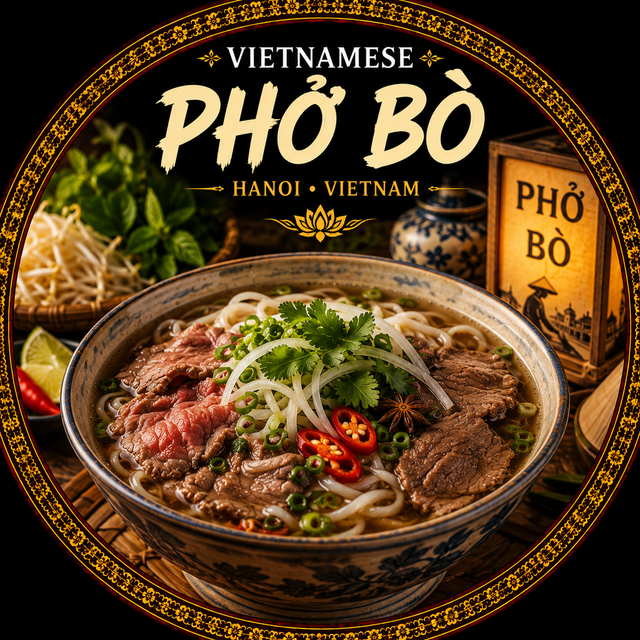
Phở appeared in northern Vietnam during the early twentieth century, especially in and around Hanoi.
Its origins reflect a meeting between Vietnamese culinary traditions, local rice noodles and long-cooked beef broth.
Street vendors carried steaming pots through Hanoi’s neighbourhoods, serving nourishing bowls from early morning.
Today, Phở Bò is enjoyed throughout Vietnam and has become one of the country’s most recognised dishes around the world.
Phở Bò symbolises warmth, hospitality and everyday Vietnamese life. A simple bowl can carry memories of family, markets and early mornings.
“One bowl can carry thoughts of home.”
— DJ Nashoba’s World Saying
Place the rice noodles neatly in a warmed deep bowl, then arrange the beef and onions above them.
The broth should be clear, aromatic and served piping hot, with a delicate balance of beef and spices.
Finish with coriander, spring onions, Thai basil, chilli, bean sprouts, lime and roasted shallot oil.
Serve with hoisin sauce, chilli sauce and extra lime wedges. Fresh herbs should remain available at the table.
“Warm broth awaits a kindred guest.”
— Traditional Chinese Saying
Taste the broth first before adding sauces, so its natural clarity and spice balance remain visible.
Combine noodles, beef, broth, onions and herbs in every mouthful. The ideal result is light, fragrant, savoury and deeply comforting.
Add fresh chilli for heat, lime for brightness, or hoisin sauce for a sweeter and richer note.
Enjoy the Phở immediately. The broth should remain steaming, the noodles tender and the herbs fresh.
“Those who share a table share its pure fragrance.”
— Traditional Chinese Saying
OFFICIAL COPYRIGHT PROTECTION NOTICE
This recipe card, including its recipe, original story, written content, illustration, image, visual identity, HTML structure, animation and presentation, is protected by applicable copyright and intellectual property laws.
Unauthorized photography, screenshots, copying, extraction, translation, republication, redistribution, commercial use or use for artificial-intelligence training may constitute copyright infringement.
Unauthorized use may be monitored.
Suspected infringements may be investigated.
Evidence of unauthorized use may be collected.
Legal action may be taken where appropriate.
ALL RIGHTS RESERVED · WORLDWIDE
KUALA LUMPUR · MALAYSIA
DJ Nashoba’s World MenuKuala Lumpur · Malaysia
Nasi Lemak is Malaysia’s beloved national dish, built around fragrant coconut rice and a generous collection of contrasting accompaniments.
The rice is gently cooked with coconut milk, pandan leaves and a touch of salt until every grain becomes rich and aromatic.
Spicy sambal, crisp anchovies, roasted peanuts, cucumber and boiled egg create the classic balance of heat, freshness, crunch and comfort.
DJ Nashoba’s version adds a deeper tamarind sambal, fragrant pandan-coconut rice and crisp spiced chicken for a refined celebratory presentation.
Nasi Lemak represents Malaysian hospitality, cultural diversity and everyday comfort. It is enjoyed at breakfast stalls, family tables and celebrations throughout the country.
“Coconut fragrance gathers people together.”
— DJ Nashoba’s World Saying
Wash the rice carefully but do not over-rinse it. Cook it gently with coconut milk and pandan, then rest it covered for ten minutes so every grain remains fragrant and separate.
Cook the sambal slowly. Its flavour should become deep, slightly sweet and rounded, never harsh or raw.
“Slow frying creates the deepest flavour.”
— Traditional Asian Saying

Nasi Lemak began as a practical meal prepared in Malay communities, especially for farmers and fishermen.
Coconut rice provided energy, while sambal, anchovies, peanuts, egg and cucumber created a complete meal.
Over time, the dish spread through markets, railway stations, homes and restaurants across Malaysia.
Today, Nasi Lemak is considered one of the strongest symbols of Malaysian culinary identity.
Nasi Lemak brings many flavours and textures together on one plate, reflecting Malaysia’s rich cultural diversity and generous food traditions.
“One plate can gather a hundred flavours.”
— DJ Nashoba’s World Saying
Shape the coconut rice into a neat mound on a fresh banana leaf. Keep the accompaniments clearly separated.
Arrange sambal, anchovies, peanuts, egg, cucumber and spiced chicken around the fragrant coconut rice.
Finish with coriander, toasted coconut, fresh chilli and a few drops of pandan oil.
Serve with extra sambal, lime wedges and a cooling cucumber salad.
“Fragrant rice welcomes a true friend.”
— Traditional Chinese Saying
Taste the coconut rice first before mixing in the sambal and the other accompaniments.
Combine rice, sambal, peanuts, anchovies, egg and cucumber in every bite. The ideal balance is spicy, creamy, fresh, crisp and deeply savoury.
Add sambal for more heat, cucumber for freshness, or coconut for a softer finish.
Enjoy the dish while the rice is warm, the anchovies crisp, and the sambal intensely fragrant.
“Those who share a table also share good fortune.”
— Traditional Chinese Saying
OFFICIAL COPYRIGHT PROTECTION NOTICE
This recipe card, including its recipe, original story, written content, illustration, image, visual identity, HTML structure, animation and presentation, is protected by applicable copyright and intellectual property laws.
Unauthorized photography, screenshots, copying, extraction, translation, republication, redistribution, commercial use or use for artificial-intelligence training may constitute copyright infringement.
Unauthorized use may be monitored.
Suspected infringements may be investigated.
Evidence of unauthorized use may be collected.
Legal action may be taken where appropriate.
ALL RIGHTS RESERVED · WORLDWIDE
KUALA LUMPUR · MALAYSIA
DJ Nashoba’s World MenuKuala Lumpur · Malaysia
Nasi Lemak is Malaysia’s beloved national dish, built around fragrant coconut rice and a generous collection of contrasting accompaniments.
The rice is gently cooked with coconut milk, pandan leaves and a touch of salt until every grain becomes rich and aromatic.
Spicy sambal, crisp anchovies, roasted peanuts, cucumber and boiled egg create the classic balance of heat, freshness, crunch and comfort.
DJ Nashoba’s version adds a deeper tamarind sambal, fragrant pandan-coconut rice and crisp spiced chicken for a refined celebratory presentation.
Nasi Lemak represents Malaysian hospitality, cultural diversity and everyday comfort. It is enjoyed at breakfast stalls, family tables and celebrations throughout the country.
“Coconut fragrance welcomes the morning light.”
— DJ Nashoba’s World Saying
Wash the rice carefully but do not over-rinse it. Cook it gently with coconut milk and pandan, then rest it covered for ten minutes so every grain remains fragrant and separate.
Cook the sambal slowly. Its flavour should become deep, slightly sweet and rounded, never harsh or raw.
“A gentle fire nurtures a rich fragrance.”
— Traditional Asian Saying

Nasi Lemak began as a practical meal prepared in Malay communities, especially for farmers and fishermen.
Coconut rice provided energy, while sambal, anchovies, peanuts, egg and cucumber created a complete meal.
Over time, the dish spread through markets, railway stations, homes and restaurants across Malaysia.
Today, Nasi Lemak is considered one of the strongest symbols of Malaysian culinary identity.
Nasi Lemak brings many flavours and textures together on one plate, reflecting Malaysia’s rich cultural diversity and generous food traditions.
“One leaf can carry a hundred flavours.”
— DJ Nashoba’s World Saying
Shape the coconut rice into a neat mound on a fresh banana leaf. Keep the accompaniments clearly separated.
Arrange sambal, anchovies, peanuts, egg, cucumber and spiced chicken around the fragrant coconut rice.
Finish with coriander, toasted coconut, fresh chilli and a few drops of pandan oil.
Serve with extra sambal, lime wedges and a cooling cucumber salad.
“Fragrant rice awaits the distant guest.”
— Traditional Chinese Saying
Taste the coconut rice first before mixing in the sambal and the other accompaniments.
Combine rice, sambal, peanuts, anchovies, egg and cucumber in every bite. The ideal balance is spicy, creamy, fresh, crisp and deeply savoury.
Add sambal for more heat, cucumber for freshness, or coconut for a softer finish.
Enjoy the dish while the rice is warm, the anchovies crisp, and the sambal intensely fragrant.
“Those who share a table share an auspicious fragrance.”
— Traditional Chinese Saying
OFFICIAL COPYRIGHT PROTECTION NOTICE
This recipe card, including its recipe, original story, written content, illustration, image, visual identity, HTML structure, animation and presentation, is protected by applicable copyright and intellectual property laws.
Unauthorized photography, screenshots, copying, extraction, translation, republication, redistribution, commercial use or use for artificial-intelligence training may constitute copyright infringement.
Unauthorized use may be monitored.
Suspected infringements may be investigated.
Evidence of unauthorized use may be collected.
Legal action may be taken where appropriate.
ALL RIGHTS RESERVED · WORLDWIDE
PENANG · MALAYSIA
DJ Nashoba’s World MenuPenang · Malaysia
Laksa is one of Malaysia’s most celebrated noodle soups, combining a fragrant spicy broth, rice noodles and fresh garnishes.
The Penang-inspired version balances chilli, lemongrass, coconut milk, tamarind and aromatic herbs in a deep, colourful soup.
Prawns, tofu, egg, cucumber, bean sprouts and fresh herbs create richness, freshness and texture.
DJ Nashoba’s version adds roasted chilli oil, lime zest and a delicate coconut finish for a refined and vibrant result.
Laksa reflects Malaysia’s multicultural identity, bringing together Malay, Chinese and Peranakan culinary traditions in one intensely aromatic bowl.
“A fragrant broth gathers a hundred flavours.”
— DJ Nashoba’s World Saying
Fry the laksa paste slowly until its colour deepens and the oil separates. This step builds the foundation of the soup’s complex aroma.
Keep the coconut broth at a gentle simmer. Strong boiling can make it oily and weaken the fresh aroma of lemongrass and kaffir lime.
“Slow cooking creates a deep fragrance.”
— Traditional Asian Saying

Laksa developed through centuries of cultural exchange in Southeast Asia, especially in trading ports such as Penang.
Malay spices, Chinese noodles and Peranakan cooking traditions came together in many regional versions.
Some laksa broths are rich with coconut milk, while others are sharper and more sour through tamarind and fish.
Today, Laksa remains one of Malaysia’s most distinctive and internationally admired dishes.
Laksa symbolises culinary exchange. Its strength comes from different traditions blending together without losing their individual character.
“A hundred flavours are born in one broth.”
— DJ Nashoba’s World Saying
Place the rice noodles neatly in the centre of a warm deep bowl. Pour the fragrant broth around them.
Arrange prawns, tofu, egg, cucumber and bean sprouts in balanced sections above the noodles.
Finish with mint, coriander, roasted chilli oil, lime zest and toasted coconut.
Serve with extra lime wedges, chilli paste and crisp prawn crackers.
“Hot broth welcomes a kindred friend.”
— Traditional Chinese Saying
Taste the broth first to appreciate the balance of coconut, chilli, tamarind and herbs.
Combine noodles, broth, prawns, tofu and fresh herbs in every mouthful. The ideal balance is spicy, creamy, tangy, fresh and deeply aromatic.
Add chilli for more heat, lime for brightness, or coconut milk for a softer finish.
Enjoy the Laksa while the broth is steaming, the noodles tender, and the herbs fresh and aromatic.
“Those who share a table share the fragrance of the broth.”
— Traditional Chinese Saying
OFFICIAL COPYRIGHT PROTECTION NOTICE
This recipe card, including its recipe, original story, written content, illustration, image, visual identity, HTML structure, animation and presentation, is protected by applicable copyright and intellectual property laws.
Unauthorized photography, screenshots, copying, extraction, translation, republication, redistribution, commercial use or use for artificial-intelligence training may constitute copyright infringement.
Unauthorized use may be monitored.
Suspected infringements may be investigated.
Evidence of unauthorized use may be collected.
Legal action may be taken where appropriate.
ALL RIGHTS RESERVED · WORLDWIDE
HANOI · VIETNAM
DJ Nashoba’s World MenuHanoi · Vietnam
Phở Bò is Vietnam’s most iconic noodle soup, known for its clear aromatic broth, tender beef and delicate rice noodles.
Beef bones are simmered slowly with charred onion, ginger, star anise, cinnamon and warm spices.
Fresh herbs, spring onions, lime and chilli bring brightness to the deep savoury flavour of the broth.
DJ Nashoba’s version adds roasted shallot oil, extra coriander and a refined spice balance for an elegant and comforting finish.
Phở Bò represents patience, family tradition and Vietnamese hospitality. It is enjoyed from early-morning street stalls to family tables throughout the country.
“When the broth is clear, the heart becomes calm.”
— DJ Nashoba’s World Saying
Char the onion and ginger deeply before adding them to the stock. Simmer gently and skim often to preserve a clear, refined broth.
Never allow the broth to boil aggressively. A calm simmer and careful skimming preserve its clarity and delicate spice balance.
“A gentle fire gathers the truest fragrance.”
— Traditional Asian Saying

Phở emerged in northern Vietnam during the early twentieth century, especially in and around Hanoi.
Its origins reflect a meeting between Vietnamese rice-noodle traditions and long-cooked beef broth.
Street vendors carried steaming pots through Hanoi’s neighbourhoods, serving nourishing bowls from early morning.
Today, Phở Bò is recognised worldwide as one of Vietnam’s greatest culinary symbols.
Phở Bò symbolises warmth, hospitality and everyday Vietnamese life. One bowl can carry memories of family, markets and early mornings.
“One bowl can carry the feeling of home.”
— DJ Nashoba’s World Saying
Place the rice noodles neatly in a warmed deep bowl. Arrange the beef and onions above them.
Pour the clear, aromatic broth piping hot over the beef and noodles.
Finish with coriander, spring onions, Thai basil, chilli and fresh lime.
Serve with hoisin sauce, chilli sauce and extra fresh herbs.
“Hot broth welcomes a kindred soul.”
— Traditional Chinese Saying
Taste the broth first before adding any sauce, so its natural spice balance remains clear.
Combine noodles, beef, broth, onion and herbs in every mouthful. The ideal balance is light, fragrant, savoury and deeply comforting.
Add chilli for heat, lime for brightness, or hoisin for a sweeter note.
Enjoy the Phở immediately while the broth remains steaming, the noodles tender and the herbs fresh.
“Those who share a table share its pure fragrance.”
— Traditional Chinese Saying
OFFICIAL COPYRIGHT PROTECTION NOTICE
This recipe card, including its recipe, original story, written content, illustration, image, visual identity, HTML structure, animation and presentation, is protected by applicable copyright and intellectual property laws.
Unauthorized photography, screenshots, copying, extraction, translation, republication, redistribution, commercial use or use for artificial-intelligence training may constitute copyright infringement.
Unauthorized use may be monitored.
Suspected infringements may be investigated.
Evidence of unauthorized use may be collected.
Legal action may be taken where appropriate.
ALL RIGHTS RESERVED · WORLDWIDE
BANGKOK · THAILAND
DJ Nashoba’s World MenuBangkok · Thailand
Tom Yum Goong is one of Thailand’s most famous soups, celebrated for its bright aroma, spicy heat and refreshing sourness.
Lemongrass, galangal, kaffir lime leaves, chillies and lime juice create the unmistakable fragrance of the broth.
Fresh prawns, mushrooms and herbs add sweetness, texture and depth while preserving the soup’s light character.
DJ Nashoba’s version adds roasted chilli oil, a touch of coconut cream and extra lime zest for a refined finish.
Tom Yum Goong represents the balance at the heart of Thai cuisine: heat, acidity, fragrance and freshness working together in perfect harmony.
“Sourness and spice awaken the heart.”
— DJ Nashoba’s World Saying
Add the lime juice only after removing the soup from direct heat. This keeps its aroma bright and prevents bitterness.
Do not overcook the prawns. They should remain tender and sweet, because only a few minutes are needed in the hot broth.
“A clear broth reveals the truest fragrance.”
— Traditional Asian Saying

Tom Yum developed in central Thailand as a fragrant soup using herbs readily available in tropical gardens.
Lemongrass, galangal, kaffir lime leaves and chilli formed the aromatic foundation of the traditional broth.
The prawn version became especially popular because seafood naturally complements the soup’s sour and spicy character.
Today, Tom Yum Goong is recognised worldwide as one of Thailand’s most distinctive dishes.
Tom Yum Goong symbolises energetic balance: sharp, hot, fresh and aromatic flavours remain distinct while supporting one another.
“One soup can harmonise a hundred flavours.”
— DJ Nashoba’s World Saying
Pour the soup into a warm deep bowl and arrange the prawns visibly across the surface.
Place the prawns carefully among the mushrooms, tomatoes and aromatic herbs.
Finish with coriander, Thai basil, chilli rings, lime zest and roasted chilli oil.
Serve with jasmine rice, extra lime wedges and crisp vegetable rolls.
“Hot soup welcomes the distant guest.”
— Traditional Chinese Saying
Taste the broth first before adding extra chilli or lime, so the natural balance remains clear.
Combine prawn, mushroom, tomato and broth in every spoonful. The ideal balance is spicy, sour, savoury and intensely aromatic.
Add chilli for more heat, lime for extra brightness, or coconut cream for a softer finish.
Enjoy the soup immediately while the prawns remain tender and the herbs fresh and fragrant.
“Those who share a table also share its fragrance.”
— Traditional Chinese Saying
OFFICIAL COPYRIGHT PROTECTION NOTICE
This recipe card, including its recipe, original story, written content, illustration, image, visual identity, HTML structure, animation and presentation, is protected by applicable copyright and intellectual property laws.
Unauthorized photography, screenshots, copying, extraction, translation, republication, redistribution, commercial use or use for artificial-intelligence training may constitute copyright infringement.
Unauthorized use may be monitored.
Suspected infringements may be investigated.
Evidence of unauthorized use may be collected.
Legal action may be taken where appropriate.
ALL RIGHTS RESERVED · WORLDWIDE
BALI · INDONESIA
DJ Nashoba’s World MenuBali · Indonesia
Nasi Goreng is Indonesia’s famous fried-rice dish, known for its smoky wok aroma, sweet soy sauce and generous garnishes.
Cold cooked rice is stir-fried with garlic, shallots, chilli, vegetables and kecap manis.
Prawns, chicken and egg add richness and texture, while fresh cucumber and lime bring balance.
DJ Nashoba’s version adds roasted sambal, crispy shallots and a golden fried egg for a bold and elegant finish.
Nasi Goreng represents Indonesian creativity: simple ingredients are transformed into a complete, aromatic and comforting meal enjoyed from homes to night markets.
“The fragrance of the wok gathers people together.”
— DJ Nashoba’s World Saying
Use rice cooked the previous day. Its drier texture absorbs the sauce without becoming soft, allowing every grain to caramelise in the wok.
Do not overcrowd the wok. Intense heat and quick movement create the smoky aroma that defines authentic Nasi Goreng.
“A strong flame creates the fragrance of the wok.”
— Traditional Asian Saying

Nasi Goreng developed as a practical way to transform leftover rice into a fresh meal.
Indonesian cooks combined rice with local chillies, shallots, garlic and sweet soy sauce.
Regional versions later appeared with chicken, prawns, vegetables, salted fish or spicy sambal.
Today, Nasi Goreng is enjoyed throughout Indonesia and recognised worldwide.
Nasi Goreng symbolises resourcefulness: yesterday’s rice becomes a vibrant new dish through heat, seasoning and imagination.
“Old rice can become a new fragrance.”
— DJ Nashoba’s World Saying
Shape the fried rice into a neat mound in the centre of a warm plate.
Place the crisp fried egg on top with its golden yolk facing upward.
Finish with crispy shallots, coriander, fresh chilli and a squeeze of lime.
Serve with roasted sambal, cucumber slices, tomato wedges and prawn crackers.
“Fragrant rice welcomes the distant guest.”
— Traditional Chinese Saying
Taste the fried rice first before adding sambal or lime, so the wok flavour remains clear.
Combine rice, chicken, prawn, egg and vegetables in every bite. The ideal balance is smoky, savoury, slightly sweet and gently spicy.
Add sambal for more heat, lime for freshness, or kecap manis for extra sweetness.
Enjoy the Nasi Goreng immediately while the rice remains hot, dry and lightly caramelised.
“Those who share a table share the fragrance of the wok.”
— Traditional Chinese Saying
OFFICIAL COPYRIGHT PROTECTION NOTICE
This recipe card, including its recipe, original story, written content, illustration, image, visual identity, HTML structure, animation and presentation, is protected by applicable copyright and intellectual property laws.
Unauthorized photography, screenshots, copying, extraction, translation, republication, redistribution, commercial use or use for artificial-intelligence training may constitute copyright infringement.
Unauthorized use may be monitored.
Suspected infringements may be investigated.
Evidence of unauthorized use may be collected.
Legal action may be taken where appropriate.
ALL RIGHTS RESERVED · WORLDWIDE
SEOUL · KOREA
DJ Nashoba’s World MenuSeoul · Korea
Bibimbap is one of Korea’s most colourful dishes, combining warm rice, seasoned vegetables, marinated beef and a golden egg.
Each ingredient is prepared separately so its own texture, colour and flavour remain clear before everything is mixed together.
Gochujang, sesame oil and toasted seeds bring heat, depth and fragrance to the fresh vegetables and tender beef.
DJ Nashoba’s version adds caramelised beef, crisp vegetables and a sesame-garlic sauce for a richer and more elegant finish.
Bibimbap represents harmony: many different colours, flavours and textures come together to create one balanced meal.
“A hundred colours can become one flavour.”
— DJ Nashoba’s World Saying
Cook every vegetable separately. This preserves its own colour, texture and seasoning before the final mixing.
Keep the vegetables lightly cooked. Bibimbap is most beautiful when every colour remains bright and every texture stays distinct.
“Different flavours create a harmonious fragrance.”
— Traditional Asian Saying

Bibimbap has been enjoyed in Korea for centuries as a practical way to combine rice and side dishes.
The name means “mixed rice,” referring to the moment when all ingredients are stirred together.
Regional versions developed with different vegetables, meats and local seasonings.
Today, Bibimbap is admired worldwide for its balance, colour and generous presentation.
Bibimbap symbolises unity: many separate ingredients become stronger and more complete when mixed together.
“Many flavours can share one heart.”
— DJ Nashoba’s World Saying
Place the rice in a warm stone bowl and arrange every ingredient in a clean colourful circle.
Place the fried egg in the centre so its golden yolk becomes the visual heart of the bowl.
Finish with sesame seeds, spring onions, crispy garlic and a few drops of chilli oil.
Serve with kimchi, pickled vegetables and extra gochujang sauce.
“Colourful rice welcomes a true friend.”
— Traditional Chinese Saying
Taste each ingredient separately first before mixing the entire bowl together.
Mix rice, vegetables, beef, egg and sauce thoroughly. The ideal result is savoury, fresh, spicy and deeply comforting.
Add more gochujang for heat, sesame oil for richness, or vinegar for freshness.
Enjoy the Bibimbap immediately while the rice is hot, the vegetables bright and the egg soft.
“Those who share a table also share one flavour.”
— Traditional Chinese Saying
OFFICIAL COPYRIGHT PROTECTION NOTICE
This recipe card, including its recipe, original story, written content, illustration, image, visual identity, HTML structure, animation and presentation, is protected by applicable copyright and intellectual property laws.
Unauthorized photography, screenshots, copying, extraction, translation, republication, redistribution, commercial use or use for artificial-intelligence training may constitute copyright infringement.
Unauthorized use may be monitored.
Suspected infringements may be investigated.
Evidence of unauthorized use may be collected.
Legal action may be taken where appropriate.
ALL RIGHTS RESERVED · WORLDWIDE
SIEM REAP · CAMBODIA
DJ Nashoba’s World MenuSiem Reap · Cambodia
Fish Amok is one of Cambodia’s most treasured dishes, combining tender fish, coconut milk, aromatic kroeung and fresh herbs.
The fish is gently coated in a fragrant curry mixture before being steamed inside banana leaves.
Coconut cream, kaffir lime, lemongrass and galangal create a smooth, delicate and deeply aromatic flavour.
DJ Nashoba’s version adds extra lime leaf, mild roasted chilli and fresh basil for a brighter and more elegant finish.
Fish Amok represents Cambodian refinement, patience and respect for natural ingredients. It is associated with family meals, ceremonies and traditional hospitality.
“A fragrant leaf can protect the truest flavour.”
— DJ Nashoba’s World Saying
Steam the Amok gently. Strong heat can separate the coconut mixture and make the fish dry, while calm steam keeps it soft and silky.
Do not overmix the fish. Gentle folding keeps the pieces intact and allows the steamed custard to remain light and delicate.
“A gentle flame protects fresh fragrance.”
— Traditional Asian Saying

Fish Amok has long been associated with Cambodian royal and ceremonial cuisine.
The dish developed around local fish, coconut milk, kroeung and the use of banana leaves.
Steaming preserved the natural sweetness of the fish while gently blending the spices and coconut.
Today, Fish Amok remains one of Cambodia’s most recognised and respected culinary symbols.
Fish Amok symbolises harmony: fish, coconut, herbs and spices are gently united without any flavour becoming dominant.
“Many fragrances can rest within one leaf.”
— DJ Nashoba’s World Saying
Place the banana-leaf cup in the centre of a warm plate beside a neat mound of jasmine rice.
Spoon warm coconut cream over the fish and allow it to settle gently across the surface.
Finish with kaffir lime, fresh basil, chilli strips and toasted coconut.
Serve with jasmine rice, lime wedges and a light cucumber salad.
“Fragrant leaves welcome the honoured guest.”
— Traditional Chinese Saying
Taste the Fish Amok first before adding lime or chilli, so the natural coconut aroma remains clear.
Combine fish, coconut custard, jasmine rice and fresh herbs in every bite. The ideal balance is creamy, aromatic, delicate and gently spicy.
Add chilli for more heat, lime for brightness, or coconut cream for extra softness.
Enjoy the Fish Amok immediately while the fish remains tender, the coconut smooth and the herbs fresh.
“Those who share a table share the fragrance of the leaf.”
— Traditional Chinese Saying
OFFICIAL COPYRIGHT PROTECTION NOTICE
This recipe card, including its recipe, original story, written content, illustration, image, visual identity, HTML structure, animation and presentation, is protected by applicable copyright and intellectual property laws.
Unauthorized photography, screenshots, copying, extraction, translation, republication, redistribution, commercial use or use for artificial-intelligence training may constitute copyright infringement.
Unauthorized use may be monitored.
Suspected infringements may be investigated.
Evidence of unauthorized use may be collected.
Legal action may be taken where appropriate.
ALL RIGHTS RESERVED · WORLDWIDE
HANOI · VIETNAM
DJ Nashoba’s World MenuHanoi · Vietnam
Bún Chả is one of Hanoi’s most beloved dishes, combining grilled pork, rice vermicelli, fresh herbs and a fragrant dipping broth.
Pork patties and thin slices are marinated with fish sauce, garlic, shallot and a touch of sweetness.
The meat is grilled until caramelised, then served with noodles, pickled vegetables and fresh herbs.
DJ Nashoba’s version adds honey-glazed pork, extra lime and a roasted garlic dipping sauce for a brighter and deeper finish.
Bún Chả represents Hanoi street-food culture: generous, fresh, social and deeply connected to everyday life in the city.
“The fragrance of charcoal gathers people together.”
— DJ Nashoba’s World Saying
Grill the pork over very high heat so the outside caramelises quickly while the centre remains juicy and tender.
Do not press the pork while grilling. Keeping the juices inside preserves tenderness and flavour.
“A lively flame creates the fragrance of charcoal.”
— Traditional Asian Saying

Bún Chả has long been associated with the streets and neighbourhoods of Hanoi.
Small grills filled the air with the fragrance of caramelised pork from early morning until lunchtime.
The dish became internationally famous after being shared by President Barack Obama and chef Anthony Bourdain in Hanoi in 2016.
Today, Bún Chả remains one of northern Vietnam’s most loved and recognisable dishes.
Bún Chả symbolises conviviality: grilled meat, noodles, herbs and broth are shared together at the table.
“Charcoal fire can carry the feeling of home.”
— DJ Nashoba’s World Saying
Arrange the vermicelli neatly beside a generous pile of fresh herbs and pickled vegetables.
Place the pork patties and slices inside the warm dipping broth so they remain juicy and fragrant.
Finish with crispy shallots, fresh chilli, sesame seeds and a squeeze of lime.
Serve with extra herbs, pickled vegetables and fresh lime wedges.
“The fragrance of charcoal welcomes the distant guest.”
— Traditional Chinese Saying
Taste the dipping broth first before adding extra lime or chilli.
Combine pork, noodles, herbs, pickles and broth in every bite. The ideal balance is smoky, fresh, sweet, sour and savoury.
Add chilli for more heat, lime for brightness, or sugar for a softer finish.
Enjoy the Bún Chả immediately while the pork is hot, the herbs fresh and the noodles tender.
“Those who share a table share the fragrance of charcoal.”
— Traditional Chinese Saying
OFFICIAL COPYRIGHT PROTECTION NOTICE
This recipe card, including its recipe, original story, written content, illustration, image, visual identity, HTML structure, animation and presentation, is protected by applicable copyright and intellectual property laws.
Unauthorized photography, screenshots, copying, extraction, translation, republication, redistribution, commercial use or use for artificial-intelligence training may constitute copyright infringement.
Unauthorized use may be monitored.
Suspected infringements may be investigated.
Evidence of unauthorized use may be collected.
Legal action may be taken where appropriate.
ALL RIGHTS RESERVED · WORLDWIDE
PENANG · MALAYSIA
DJ Nashoba’s World MenuPenang · Malaysia
Char Kway Teow is one of Malaysia’s most famous street-food dishes, celebrated for its smoky wok aroma, glossy rice noodles and rich savoury flavour.
Flat rice noodles are stir-fried quickly with prawns, egg, Chinese sausage, bean sprouts and garlic chives.
Soy sauce, oyster sauce and chilli create the deep caramelised seasoning that coats every strand.
DJ Nashoba’s version adds roasted garlic, extra lime and a touch of sesame for a brighter and more elegant finish.
Char Kway Teow reflects Penang’s multicultural heritage, combining Chinese wok technique with local Malaysian ingredients and the energy of street-food cooking.
“The breath of the wok creates true flavour.”
— DJ Nashoba’s World Saying
Use the hottest wok possible and cook only one or two portions at a time. High heat creates the smoky wok hei without making the noodles soft.
Do not stir the noodles continuously. Allow them to touch the hot wok for a few seconds between each toss so they can caramelise properly.
“A fierce flame creates the breath of the wok.”
— Traditional Asian Saying

Char Kway Teow became famous in the busy street-food stalls of Penang.
The name means “stir-fried rice-cake strips,” referring to the wide flat noodles cooked quickly over intense heat.
The dish was once valued as an affordable and energetic meal for labourers and fishermen.
Today, it is one of Malaysia’s most iconic street foods and a symbol of Penang cuisine.
Char Kway Teow symbolises speed, skill and the instinct of the wok cook. A few minutes of fire transform simple noodles into a memorable dish.
“One wok can create a hundred fragrances.”
— DJ Nashoba’s World Saying
Place the noodles in a warm shallow bowl and keep their glossy shape loose and natural.
Arrange the prawns, pork, sausage and egg evenly through the noodles.
Finish with roasted garlic, sesame seeds, fresh chilli and garlic chives.
Serve with lime wedges, extra chilli and a light cucumber salad.
“The fragrance of the wok welcomes the distant guest.”
— Traditional Chinese Saying
Taste the noodles first before adding extra chilli or lime, so the wok aroma remains clear.
Combine noodles, prawn, pork, egg and bean sprouts in every bite. The ideal balance is smoky, savoury, lightly sweet and gently spicy.
Add chilli for more heat, lime for brightness, or soy sauce for extra depth.
Enjoy the Char Kway Teow immediately while the noodles remain hot, smoky and lightly caramelised.
“Those who share a table share the fragrance of the wok.”
— Traditional Chinese Saying
OFFICIAL COPYRIGHT PROTECTION NOTICE
This recipe card, including its recipe, original story, written content, illustration, image, visual identity, HTML structure, animation and presentation, is protected by applicable copyright and intellectual property laws.
Unauthorized photography, screenshots, copying, extraction, translation, republication, redistribution, commercial use or use for artificial-intelligence training may constitute copyright infringement.
Unauthorized use may be monitored.
Suspected infringements may be investigated.
Evidence of unauthorized use may be collected.
Legal action may be taken where appropriate.
ALL RIGHTS RESERVED · WORLDWIDE
BANGKOK · THAILAND
DJ Nashoba’s World MenuBangkok · Thailand
Tom Yum Goong is one of Thailand’s most famous soups, celebrated for its bright aroma, spicy heat and refreshing sourness.
Lemongrass, galangal, kaffir lime leaves, chillies and lime juice create the unmistakable fragrance of the broth.
Fresh prawns, mushrooms and herbs add sweetness, texture and depth while preserving the soup’s light character.
DJ Nashoba’s version adds roasted chilli oil, a touch of coconut cream and extra lime zest for a refined finish.
Tom Yum Goong represents the balance at the heart of Thai cuisine: heat, acidity, fragrance and freshness working together in perfect harmony.
“Sourness and spice open the door of the heart.”
— DJ Nashoba’s World Saying
Add the lime juice only after removing the soup from direct heat. This keeps its aroma bright and prevents bitterness.
Do not overcook the prawns. They should remain tender and sweet, because only a few minutes are needed in the hot broth.
“A clear broth can hold a hundred fragrances.”
— Traditional Asian Saying

Tom Yum developed in central Thailand as a fragrant soup using herbs readily available in tropical gardens.
Lemongrass, galangal, kaffir lime leaves and chilli formed the aromatic foundation of the traditional broth.
The prawn version became especially popular because seafood naturally complements the soup’s sour and spicy character.
Today, Tom Yum Goong is recognised worldwide as one of Thailand’s most distinctive dishes.
Tom Yum Goong symbolises energetic balance: sharp, hot, fresh and aromatic flavours remain distinct while supporting one another.
“One soup can gather a hundred flavours.”
— DJ Nashoba’s World Saying
Pour the soup into a warm deep bowl and arrange the prawns visibly across the surface.
Place the prawns carefully among the mushrooms, tomatoes and aromatic herbs.
Finish with coriander, Thai basil, chilli rings, lime zest and roasted chilli oil.
Serve with jasmine rice, extra lime wedges and crisp vegetable rolls.
“Hot soup awaits a kindred friend.”
— Traditional Chinese Saying
Taste the broth first before adding extra chilli or lime, so the natural balance remains clear.
Combine prawn, mushroom, tomato and broth in every spoonful. The ideal balance is spicy, sour, savoury and intensely aromatic.
Add chilli for more heat, lime for extra brightness, or coconut cream for a softer finish.
Enjoy the soup immediately while the prawns remain tender and the herbs fresh and fragrant.
“Those who share a table share the fragrance of the soup.”
— Traditional Chinese Saying
OFFICIAL COPYRIGHT PROTECTION NOTICE
This recipe card, including its recipe, original story, written content, illustration, image, visual identity, HTML structure, animation and presentation, is protected by applicable copyright and intellectual property laws.
Unauthorized photography, screenshots, copying, extraction, translation, republication, redistribution, commercial use or use for artificial-intelligence training may constitute copyright infringement.
Unauthorized use may be monitored.
Suspected infringements may be investigated.
Evidence of unauthorized use may be collected.
Legal action may be taken where appropriate.
ALL RIGHTS RESERVED · WORLDWIDE
TOKYO · JAPAN
DJ Nashoba’s World MenuTokyo · Japan
Katsudon is a beloved Japanese comfort dish, combining a crispy pork cutlet, soft egg, sweet onion and steamed rice.
The tonkatsu is fried until golden, then gently simmered with dashi, soy sauce, mirin and onion.
Beaten egg is added at the end so it remains soft and silky around the crisp pork cutlet.
DJ Nashoba’s version adds toasted sesame, spring onion and a light yuzu finish for a brighter and more elegant bowl.
Katsudon represents comfort, perseverance and everyday Japanese warmth. It is often enjoyed as a satisfying meal before an important challenge or examination.
“A victorious flavour warms the heart.”
— DJ Nashoba’s World Saying
Let the fried pork rest briefly before slicing it. This keeps the crust crisp and prevents the juices from escaping.
Do not cook the egg until completely firm. A soft, silky texture is essential to authentic Katsudon.
“A gentle fire creates a silky flavour.”
— Traditional Asian Saying

Katsudon appeared in Japan during the early twentieth century as tonkatsu became increasingly popular.
The dish combined Western-inspired breaded pork with Japanese dashi, rice and softly cooked egg.
Its name joins “katsu,” meaning cutlet, with “don,” meaning rice bowl.
Today, Katsudon is one of Japan’s most familiar comfort foods and is strongly associated with encouragement.
Katsudon is linked with success because “katsu” also sounds like the Japanese word meaning “to win.”
“One bowl can carry the spirit of victory.”
— DJ Nashoba’s World Saying
Place warm Japanese rice in the centre of a deep bowl and keep the surface level.
Slide the pork cutlet, onion and softly set egg carefully over the rice.
Finish with spring onion, shredded nori, sesame seeds and a touch of yuzu zest.
Serve with miso soup, Japanese pickles and hot green tea.
“A victorious bowl welcomes a true friend.”
— Traditional Chinese Saying
Taste the egg and sauce first before adding extra seasoning.
Combine pork, egg, onion and rice in every bite. The ideal balance is crisp, soft, savoury and gently sweet.
Add soy sauce for depth, yuzu for freshness, or sesame oil for richness.
Enjoy the Katsudon immediately while the pork remains crisp and the egg soft and warm.
“Those who share a table also share victory.”
— Traditional Chinese Saying
OFFICIAL COPYRIGHT PROTECTION NOTICE
This recipe card, including its recipe, original story, written content, illustration, image, visual identity, HTML structure, animation and presentation, is protected by applicable copyright and intellectual property laws.
Unauthorized photography, screenshots, copying, extraction, translation, republication, redistribution, commercial use or use for artificial-intelligence training may constitute copyright infringement.
Unauthorized use may be monitored.
Suspected infringements may be investigated.
Evidence of unauthorized use may be collected.
Legal action may be taken where appropriate.
ALL RIGHTS RESERVED · WORLDWIDE
